Why shop-bought rat poison rarely works
A box of rat poison from the hardware shop looks like the cheap and quick fix. For a single stray rat it occasionally is. More often the bait sits untouched, a rat dies somewhere behind a wall, or the rats carry on as before and everyone in the house decides rats are simply impossible to shift. Here is why, and what works instead.
Key points
- Amateur rodenticides are weaker than professional ones and sold in small packs, so they rarely deliver enough to clear an established infestation.
- Rats are wary of anything new, so bait can be ignored for days, and some rat populations are resistant to the products sold to the public.
- Loose bait in a house or garden puts pets, children and wildlife at risk, and a rat that dies behind a wall can smell for weeks.
- Poison on its own does nothing about the gap they came in through, so the next rat follows the same route.
- A professional treatment uses tamper-resistant stations after a survey, includes follow-up visits and a search for carcasses, and ends with proofing advice.
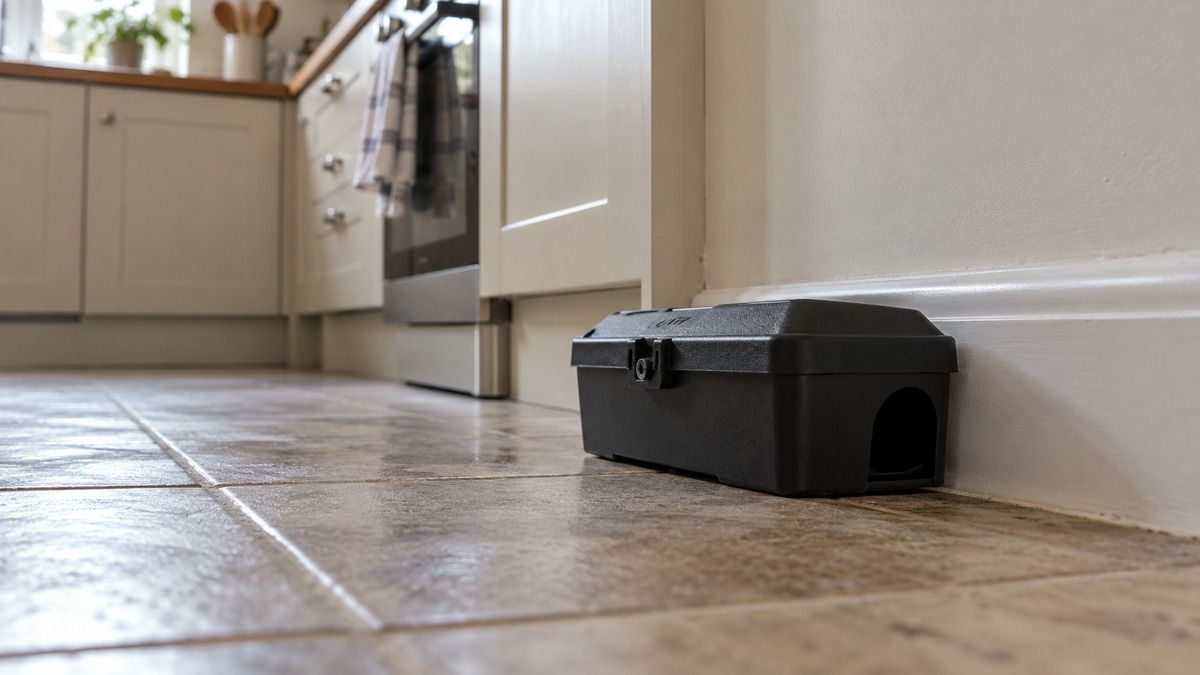
Why shop-bought rat poison rarely works: the short answer
The products sold to the public are made deliberately weaker than the ones a professional uses, and the rules limit how much can be sold in one pack. That is a sensible safety measure, but it means a shop-bought box is designed for a small problem, not for a colony that has been living under the decking since the spring. Most people buy it when the problem is already well beyond that.
On top of the product itself, there are the habits of the animal. Rats do not walk up to something new and eat it. They distrust it, they learn from a dose that makes them ill, and in some areas they have inherited a resistance to the chemistry in amateur baits. Put all of that together and a box of poison from the shop ends up being, at best, a delay before you call someone.
None of this means poison is useless. It means the version you can buy, used on its own without a survey, follow-up visits, a carcass search or proofing, is the wrong tool for most rat problems. The rest of this guide goes through each reason in turn and then explains what a rat treatment does differently.
Rats avoid anything new
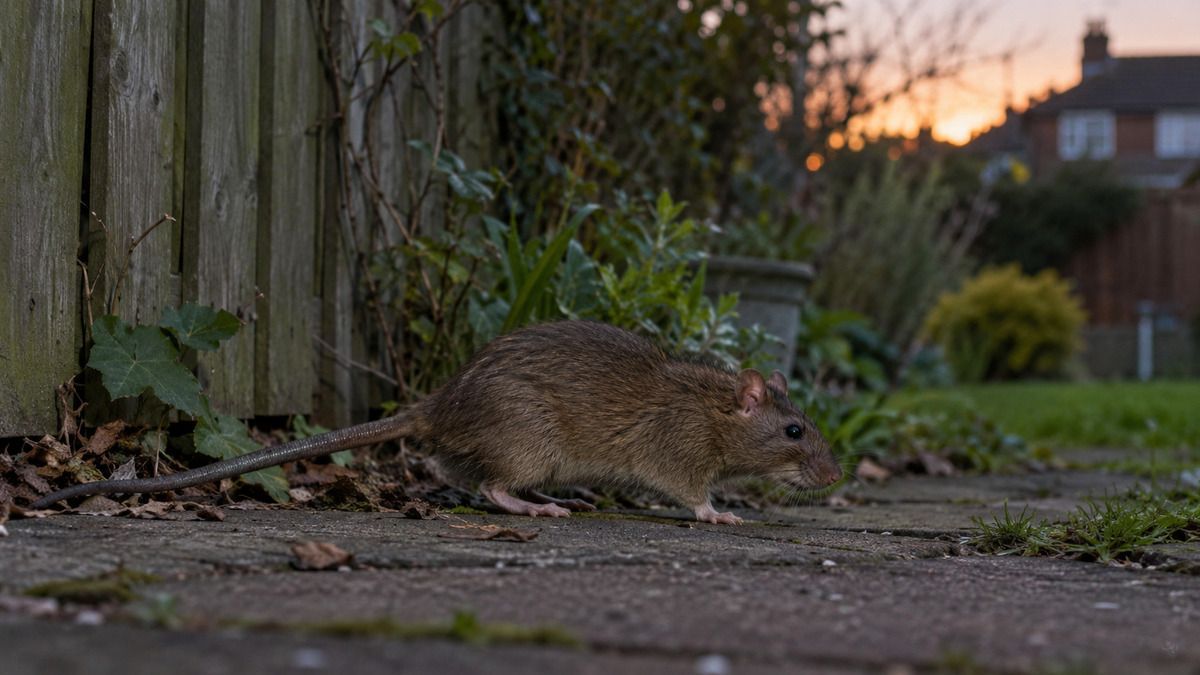
A brown rat lives by routine. It uses the same runs every night, feeds in the same places and treats any new object on its route with suspicion. Pest controllers call it neophobia. A bait box that appears overnight is not food to a rat, it is a threat, and it can be left alone for several days before one rat finally tries it and the others follow.
That delay is where many home attempts fail. The box is checked after two nights, nothing has gone, and the bait is moved, topped up or thrown away. Each change resets the clock. A professional expects the wait, leaves the stations where they are and comes back on a follow-up visit to see what has happened. Mice are the opposite, curious about anything new, which is one reason getting rid of mice tends to go faster.
Tried the shop and still got rats?
Describe the droppings, the gnawing or the hole they use, and where you found them, and we reply by email with one fixed price for a treatment that includes the follow-up visits and a carcass search.
Bait shyness and resistance
If a rat eats a little of a weak bait and feels unwell, it links the feeling to the food and avoids it from then on. This is bait shyness, and other rats in the colony learn from its example. A half-strength product in a small pack makes it more likely, because the animal gets enough to feel ill and not enough to die.
Resistance is the other problem. In parts of the UK, rat populations have evolved so that the chemistry in common amateur baits has little effect on them. The rats eat the bait, carry on as before and breed. A technician knows which areas have resistance and chooses a treatment to suit, which is not something a shop shelf can do for you.
The risk to pets, children and wildlife
Loose bait, or bait in a flimsy tray, is a danger to anything that finds it. Dogs will eat it, cats and foxes will eat a poisoned rat, and owls and other birds of prey can pick it up through the same chain. Small children put things in their mouths. The warnings on the pack are there for a reason, and in a busy home or an open garden they are hard to follow.
This is why professional rodenticides are only placed in tamper-resistant stations, locked boxes that a rat can enter but a dog, a cat or a child cannot. The station stays where it was put, it is checked on every visit and it is taken away at the end of the treatment. Nothing is left loose in the house or garden at any point.
Rats that die where you cannot reach them
A poisoned rat does not come out into the open to die. It goes back to its nest, which may be under the floor, in a cavity wall, behind the bath panel or deep in the loft insulation. A few days later the house starts to smell, and the smell can last for weeks in warm weather. Flies follow. Finding the carcass means lifting boards or cutting into plasterboard, and sometimes it cannot be found at all.
A treatment with follow-up visits takes this seriously. On each return the technician searches for carcasses in the places rats use and removes any that are found, and tells you where the risk remains if one is out of reach. With a shop-bought product there is nobody coming back, so the smell is yours to deal with.
No follow-up and no proofing, so they come back
Even when shop poison kills the rats that are there, it does nothing about why they came. The broken drain, the gap under the shed, the bird feeder that spills seed every morning and the hole where the gas pipe enters the wall are all still there. Rats from the next garden or the sewer below find the same route within weeks and you are back at the start.
The long-term fix is proofing: steel mesh, cement, brush strips, airbrick covers and, where a drain is the route, a repair by a drainage contractor. A professional treatment ends with a summary of where the rats were getting in and what would stop them. Poison from the shop ends when the box is empty.
What a professional does differently
Professional rodenticides are stronger and are only sold to people with the right training. From 1 January 2026 the rules tightened further: sellers of professional rodenticides accept only approved training completed in 2021 or later, or older training combined with membership of an approved continuing development scheme. That is an industry-wide change designed to keep these products in the hands of people who use them properly.
A treatment starts with a survey, not a bait box. The technician identifies the species from droppings, gnawing and tracks, finds where the activity is and looks for the way in. Tamper-resistant stations or traps go where the rats actually run. Follow-up visits, usually 2 to 3 over 2 to 3 weeks, check and refresh the stations, search for carcasses and track whether the activity is falling. The treatment ends with a written summary and proofing advice. The national company we send is a BPCA member and CPD registered, holds ISO 9001 and British Safety Council certification, is SafeContractor approved and has a waste carrier licence for England and Wales, which covers the carcasses and used bait taken off site. Asking whether a firm belongs to the BPCA is a fair question to put to anyone you are thinking of booking.
Glue traps are not an alternative. Since 31 July 2024 it has been an offence for the public to use them in England, they are banned in Wales, and they are banned in Scotland from 1 July 2026. We do not use them. Snap traps for mice remain legal for the public, must be checked regularly and work best along the walls where mice run, but a treatment with follow-ups is what finds the source. If you would rather try the council first, read does the council do pest control, or see the full set of options in how to get rid of rats.
Rodent problems we treat
More guides

Questions people ask
Does shop-bought rat poison ever work?
For a single rat that has wandered in, occasionally. For an established problem it rarely does, because the product is weaker, the pack is small, rats avoid it for days and some populations are resistant. Nobody comes back to find carcasses or seal the gap, so the problem returns.
Why has the bait not been touched?
Rats distrust anything new on their route and can ignore a bait box for several days. Moving it or topping it up resets that wait. If nothing has gone after a reasonable time, it may be in the wrong place, or the rats may be feeding on something they prefer nearby.
Is it safe to use rat poison with a dog in the house?
Loose bait or a flimsy tray is a risk to dogs, cats and children, and a poisoned rat can harm a pet that catches it. Professional treatments use tamper-resistant stations that pets cannot open. If you think a pet has eaten bait, contact a vet straight away.
Can I use a glue trap instead?
No. It has been an offence for the public to use glue traps in England since 31 July 2024, they are banned in Wales, and they are banned in Scotland from 1 July 2026. We do not use them. Snap traps for mice are legal for the public and must be checked regularly.
Skip the box and get it dealt with properly
Put what you have seen and heard in the form, with your postcode and when it started. We reply with one fixed price for the whole treatment and the earliest visit we have.
- Fixed price by email
- Follow-up visits included
- A BPCA member contractor
- Next day where possible

Get a fixed price for the treatment
Tell us what you have seen and heard, where, and when it started, and we reply by email with a fixed price for the whole treatment.
Sent.
Prefer to write? Email hello@rodent-control.uk with your postcode, your phone number and what you have found.