
- Home
- Rats and mice in the loft
Rats and mice in the loft
Scratching above the bedroom ceiling at night? Tell us when it starts and what is on the insulation, and we reply with one fixed price for the treatment, follow-ups included.
- Night noises traced
- Droppings on insulation checked
- Gnawed cables found
- Follow-ups in the price

Get a fixed price for the treatment
Tell us what you have seen and heard, where, and when it started, and we reply by email with a fixed price for the whole treatment.
Sent.
Prefer to write? Email hello@rodent-control.uk with your postcode, your phone number and what you have found.
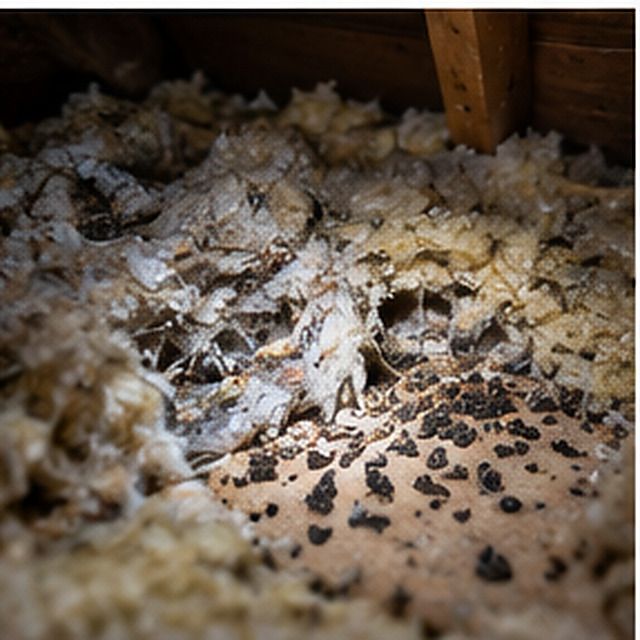
Noises in the loft are the reason most people get in touch with us. Scratching, scurrying and the occasional thud above the bedroom ceiling, usually beginning after dark and going quiet by morning, mean something has moved in. Up the ladder, you find droppings scattered over the insulation, a tunnel pressed into it where an animal has nested, and perhaps a cable with the outer sheath stripped back. Describe the droppings and the damage on the form and we reply by email with one fixed price for the treatment.
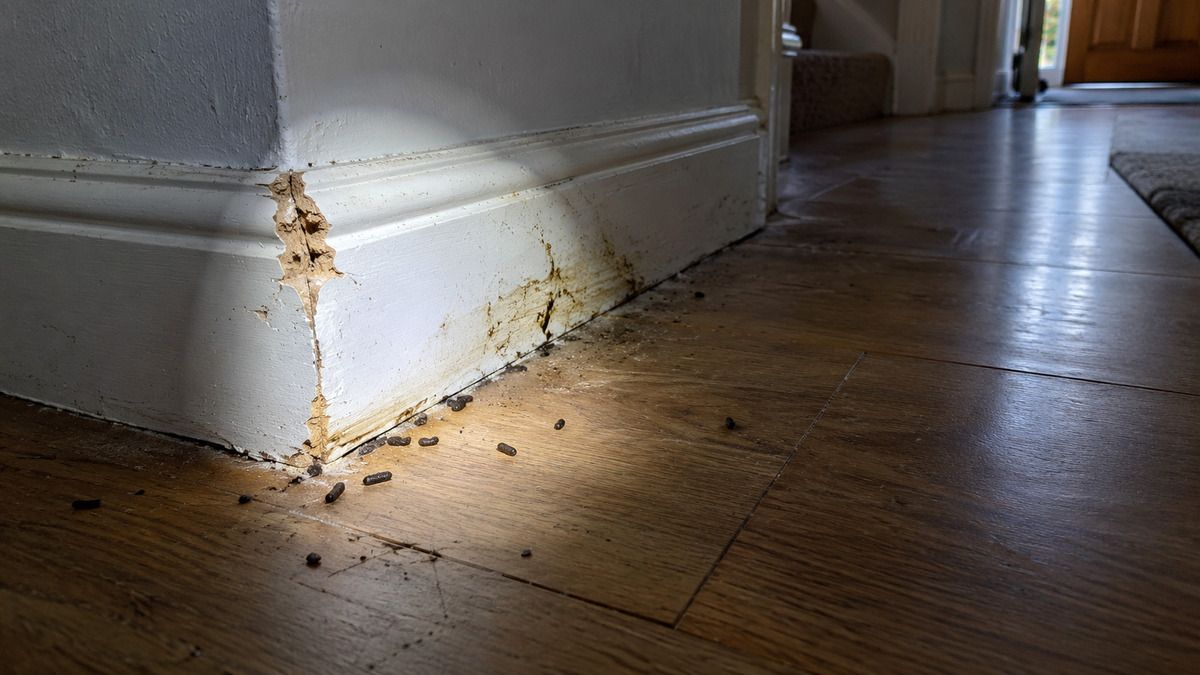
Timing tells you a lot about what is up there. Rats and mice are mostly active at night, so a loft that is noisy between dusk and dawn and silent during the day points to one of the two. Grey squirrels are active by day, with a burst of activity at first light and again in the late afternoon, and they sound heavier, so if the noise comes with daylight our grey squirrel control page is the one to read. Droppings settle it: describe their size and shape and we tell you which it is.
Rodents reach the loft through gaps around the eaves and soffits, up the cavity wall from a broken airbrick or a gap at the damp course, and along pipes and cables where they pass through the ceiling. Once inside they gnaw cables, which is a fire risk, foul the insulation and nest in it. The treatment is priced from your description as one figure covering the first visit and the follow-ups, with nothing added on the day. A standard treatment is usually 2 to 3 visits over 2 to 3 weeks. Proofing of the eaves and gaps is quoted on the first visit.
If you want to compare the signs first, signs of rats or mice in your house covers droppings, noises and smells room by room, and how to get rid of rats explains every route from the council to a professional treatment. Rats that are also in the kitchen are dealt with on the rat control page, and a mouse problem downstairs on mouse control. We do not replace loft insulation, but we tell you what has been fouled so you can plan for it.
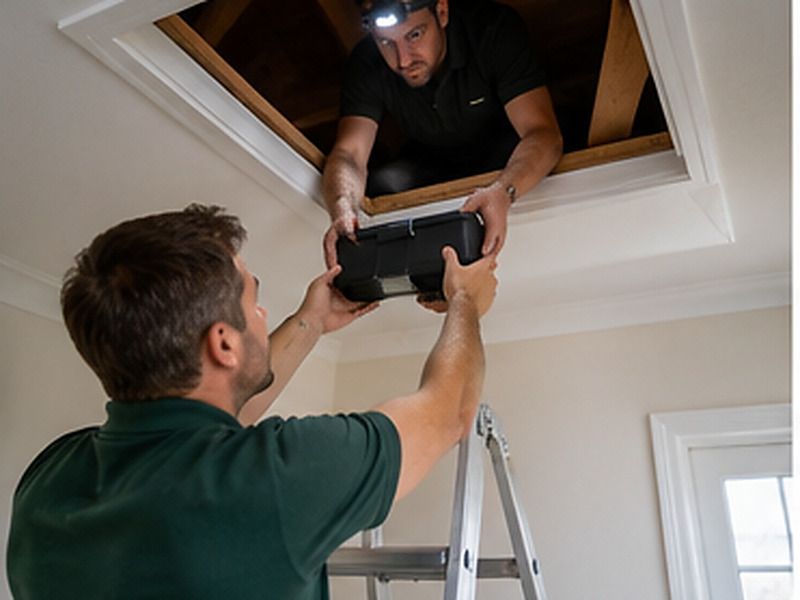
A fixed price before anyone climbs the ladder
The figure we send from your description covers the first visit and the follow-ups. Proofing the eaves and gaps is quoted separately once the technician has found the way in.
What the treatment includes

What the treatment covers
- Survey of loft, eaves and walls
- Rat, mouse or squirrel confirmed
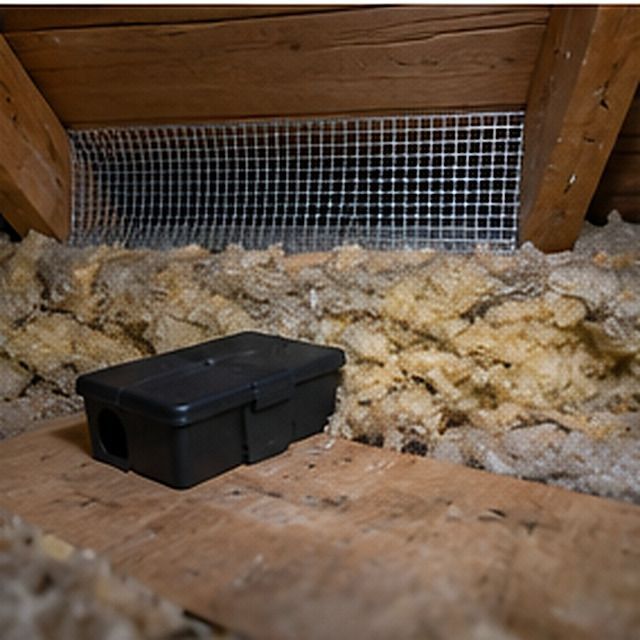
- Bait stations or traps in the loft
- Follow-up visits included
- Carcasses searched for and removed
- Advice on proofing the eaves
- Written summary of what was found
- Advice on fouled insulation
What the technician does on the visit
- Checks droppings on the insulation
- Looks for nests and tunnels
- Inspects cables for gnawing
- Checks the eaves and soffit gaps
- Looks at pipe and cable holes
- Walks the outside for the way in
- Sets stations where the runs are
- Explains the next steps before leaving
How a loft treatment works
-
Tell us what you have found
Describe the droppings on the insulation, any gnawed cable or gap at the eaves, and tell us when the noises start and which room they are above.
-
Get a fixed price
We reply by email with one figure for the loft treatment, follow-up visits included. If what you describe sounds like squirrels rather than rats, we say so and price accordingly.
-
The first visit
The technician goes into the loft, confirms the species from the droppings and nests, checks the eaves and cavity for the way in, and sets stations or traps on the runs.
-
The follow-ups
Stations and traps are checked, carcasses are removed, the insulation is checked for fresh droppings, and you get a summary with the proofing that would keep the loft quiet.
Why people use us
Night noises taken seriously
Scratching above the ceiling is hard to sleep through. We aim for a next-day visit wherever possible, and the price arrives by email before anyone comes out.
Follow-ups already paid for
A loft is rarely cleared in one go. The return visits to check stations and remove carcasses are in the figure we send, not billed afterwards.
BPCA members up the ladder
The national company that carries out our loft treatments is a BPCA member and CPD registered, British Safety Council certified for safe working practices, and SafeContractor approved.
The way in is found
Eaves, soffits, cavity walls and pipe runs are checked from inside and out. The technician tells you where they are climbing in and quotes the proofing on the first visit.
What happens on a loft treatment
The first visit starts with the technician going up into the loft with a torch and reading what is there. Rat droppings are large and scattered along the joists, mouse droppings are small and numerous, and squirrel droppings are rounder and found with stripped nuts or shredded insulation. Runs across the insulation and tunnels into it show where the animals are travelling and nesting. Cables are checked for gnawing and you are told if anything needs an electrician. The technician then goes outside to look at the eaves, soffits, airbricks and any pipe passing through the wall, because the loft is only reached from outside or up the cavity. Tamper-resistant bait stations or traps are placed on the runs between the joists.
Before the visit, clear a path to the loft hatch and leave a ladder out if you have one, and do not sweep or vacuum the insulation, because the pattern of droppings is what tells the technician where to put the stations. Note which rooms the noise is above and what time it starts and stops, since that helps separate a rat from a squirrel. Anything stored in the loft that has been chewed, such as a box of decorations, is worth leaving for the technician to see. If the loft has a water tank without a lid, mention it on the form. Keep children and pets out of the loft once the stations are in, and do not put down shop-bought bait in the meantime.
On the follow-up visits the technician checks and refreshes every station, resets any traps, looks for fresh droppings and searches for carcasses, which are removed so nothing is left to smell through the ceiling. They go out with the contractor, who is a licensed waste carrier in England and Wales, along with any spent bait. A standard treatment is usually 2 to 3 visits over 2 to 3 weeks, and the loft is treated as finished when no fresh signs appear between visits. You then get a written summary of what was found, which gaps were being used, and the proofing that would keep them out, quoted as a separate job. We do not replace fouled insulation, but the summary says what has been damaged so you can arrange that.
Before and after
Other rodent problems we deal with
-
Rats
Brown rats in and around the house
Find out more -
Mice
House mice in kitchens and walls
Find out more -
Squirrels
Grey squirrels in the loft and roof
Find out more -
Proofing
Sealing the gaps they get in through
Find out more -
Not sure what it is?
Describe what you have found
Find out more -
Garden, shed and decking
Burrows, compost bins, bird feeders
Find out more
View every rodent service
-
A BPCA member contractor The company that does the work is a BPCA member and CPD registered
-
Fixed price by email One figure for the whole treatment, nothing added on the day
-
Follow-up visits included A standard treatment is 2 to 3 visits over 2 to 3 weeks
-
Safety assessed firms ISO 9001, British Safety Council, SSIP and SafeContractor
Guides that go with this
Loft rodent questions
Is it rats, mice or squirrels in my loft?
Listen to the clock. Rats and mice are mostly active at night, so scratching after dark points to them, with rats sounding heavier and mice lighter and faster. Squirrels are active by day, especially early morning and late afternoon. Droppings on the insulation settle it, so tell us how big they are and we say which you have.
How are they getting into the loft?
Usually through a gap at the eaves or soffit, up the cavity wall from a broken airbrick or a hole at ground level, or along a pipe or cable where it passes through the wall. Mice need a pencil-width gap and rats a thumb-width one. The technician checks inside and outside on the first visit.
Will the gnawed cables be repaired?
No, we do not do electrical work. The technician points out any cable with gnawing on the sheath and notes it in the summary, so you can have an electrician check it. Chewed wiring is a fire risk, which is one reason not to leave rodents in a loft for long.
Do you replace the insulation they have fouled?
No. The treatment removes the rodents and the carcasses, and the summary tells you which areas of insulation have droppings or nests in them. Replacing or topping up insulation is a separate job for an insulation installer, and we advise on sanitising before that is done.
Can I go in the loft while the stations are there?
Yes, but take care. The stations are tamper-resistant and sit on the runs between the joists, so leave them where they are and keep children and pets out of the loft. If you need to move one to get at something stored up there, tell the technician on the next visit so it can be checked.
What if it turns out to be squirrels?
We say so and treat it as a squirrel job. Grey squirrels are trapped in the loft and humanely dispatched by the technician, because a trapped grey squirrel cannot legally be released. The price is sent before anyone comes out, and if your description already points to squirrels we quote for that from the start.
Tell us what is in the loft and get a price for the treatment
Use the form above, or email hello@rodent-control.uk with your postcode and what you have found. We reply with a fixed price and the earliest visit we have.