
- Home
- Commercial rodent control
Commercial rodent control
Rats and mice dealt with in kitchens, shops, offices, stores and rented property, with a written report after every visit and a fixed price agreed before the first one.
- One-off or contract visits
- Written report every visit
- Visits outside trading hours
- Numbered, mapped stations

Get a fixed price for the treatment
Tell us what you have seen and heard, where, and when it started, and we reply by email with a fixed price for the whole treatment.
Sent.
Prefer to write? Email hello@rodent-control.uk with your postcode, your phone number and what you have found.
Rodents in business premises are rarely a surprise to the people who work there. Droppings along the back of a kitchen, gnawed packaging in a stock room, a smell in a stairwell or a rat seen by the bins at closing time are the usual first signs. Restaurants, cafes, takeaways, shops, offices and warehouses all get them, and so do landlords and letting agents with HMOs or the communal areas of a block of flats. Tell us what has been seen and where, when it started and the postcode of the premises, and we reply by email with a fixed price for the treatment.
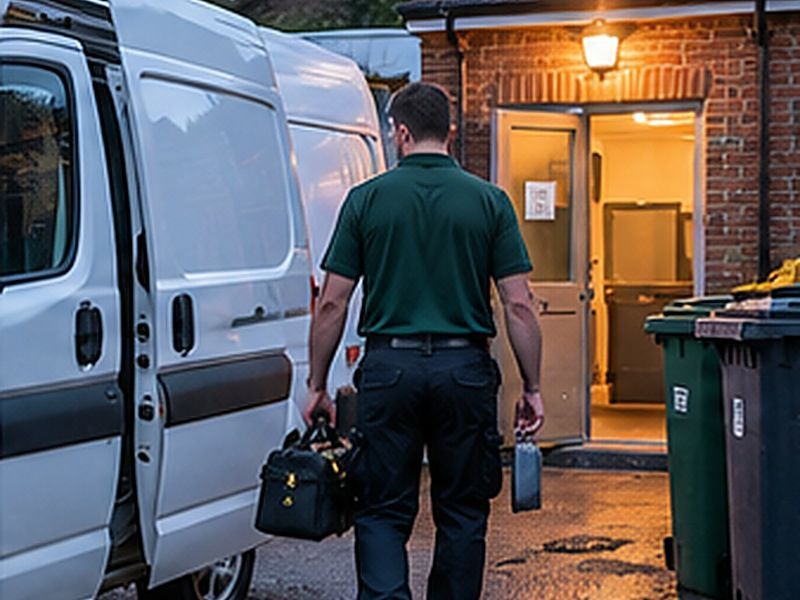
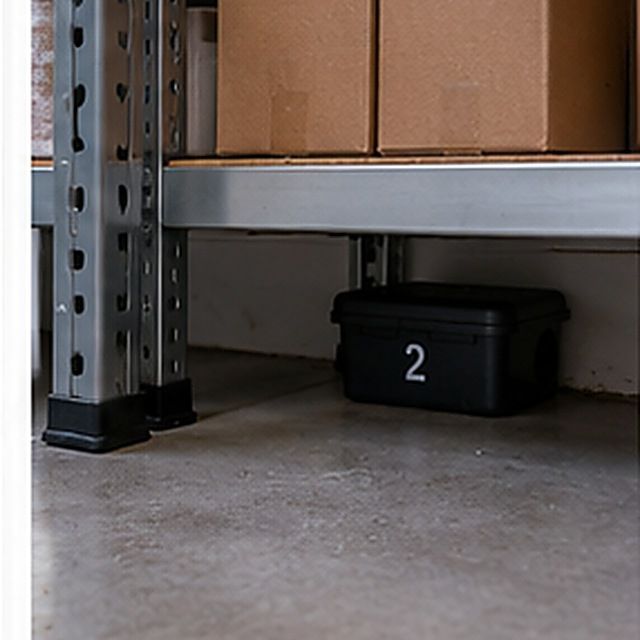
A commercial treatment starts the same way as a rat treatment or a mouse treatment in a house: a survey, identification of the species, a search for the way in and tamper-resistant bait stations or traps placed where there is activity. Each station is numbered and marked on a plan of the premises so the follow-up visits are quick and nothing gets missed. Where a kitchen or a shop floor cannot have a technician walking through it during service, the visit is booked outside trading hours and the van is parked out of sight of your customers.
You can book a one-off treatment or set up regular contract visits, and both are priced from your description as a single figure with nothing added on the day. Contract visits are quoted as a fixed amount per visit, agreed in writing before the first one. Proofing is quoted separately once the technician has found the entry points on the first visit, because the cost depends on what they turn out to be. Our guide to what affects the cost of rodent control explains why a warehouse and a small cafe are not priced the same.
After each visit you receive a written report covering what was found, which stations were checked, what was refreshed and what still needs doing. Keep it with your pest control records: it is the document an environmental health officer or an auditor asks to see. Food businesses have a duty under food hygiene law to keep pests out of the premises and to show how they do it, and the report is part of that evidence. If you already know the gaps they are using, our rodent proofing page covers sealing them, and does the council do pest control explains what a council can and cannot do for a business.
One fixed price from your description
Describe the droppings, the damage or the gap, and the price we send covers the first visit and the follow-ups. Proofing is quoted on the first visit once the technician has found the way in.
What the treatment includes
What the treatment covers
- Survey of the whole premises
- Species identified from the signs
- Numbered and mapped bait stations
- Follow-up visits in the price
- Carcass search and removal
- Proofing recommendations in writing
- Written report after every visit
- Sanitising advice for food areas
What the technician does on the visit
- Walks the kitchen, stores and bin area
- Checks drains, ducts and service voids
- Finds where they are getting in
- Keeps stations away from food and stock
- Numbers each station on a site plan
- Checks and refreshes stations on follow-ups
- Notes what staff should change
- Hands over the report before leaving
How a commercial treatment works
-
Describe the problem
Tell us about the droppings, the gnawing or the gap, the type of premises, when it is open and whether food is handled. A manager or a tenant can fill the form in.
-
Get a fixed price
We reply by email with one figure for a one-off treatment, or a per-visit figure for a contract. Both include the follow-ups and the written reports.
-
The first visit
The technician surveys the premises, confirms the species, finds the entry points, places numbered stations or traps and draws the site plan. Visits can be booked before opening or after closing.
-
The follow-ups
Each station is checked and refreshed, carcasses are searched for and removed, and the report is updated. The final one includes the proofing that would keep the premises clear.
Why people use us
A report you can show
Every visit ends with a written report listing the stations, what was found and what was done. An environmental health officer or an auditor can read it without asking you to explain anything.
BPCA, SSIP and SafeContractor
The national company that carries out our commercial work is a BPCA member and CPD registered, SSIP accredited and SafeContractor approved, which is what procurement teams usually ask a supplier to show.
Stations numbered and mapped
Tamper-resistant stations are placed where the activity is, numbered and marked on a plan of the premises. Bait is never loose in a kitchen, a store or a stairwell.
Around your trading hours
Early morning, late evening and closed days are all workable, and next-day visits are offered where possible. The van can park away from the front of the premises.
Treating rats and mice in business premises
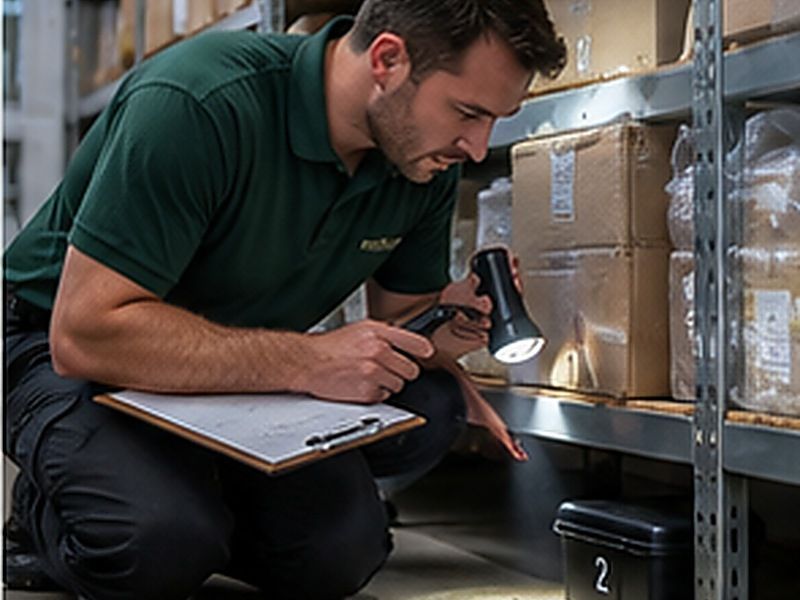
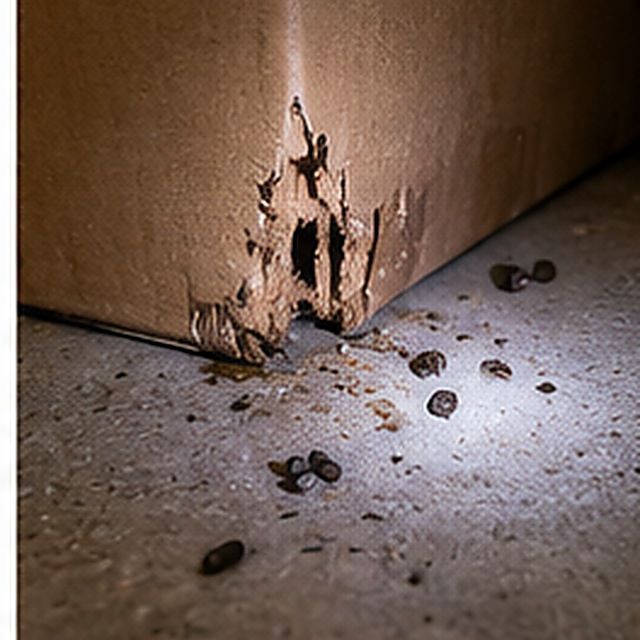
Business premises have more ways in than a house and more reasons for rodents to stay. A delivery door propped open for the bins, a gap where a gas pipe passes through a wall, a redundant drain under an old extension or a suspended ceiling that runs above several units in a parade all give rats and mice a route. On the first visit the technician walks the kitchen, the stores, the bin area, the roof void and any shared stairwell, confirms whether it is rats or mice from the droppings and gnawing, and places tamper-resistant stations or traps along the runs. Each one is numbered and marked on a plan so the next visit picks up exactly where the last one left off.
Before the first visit, let staff know not to clean up the droppings or move the gnawed stock until the technician has seen them, because that evidence shows where the activity is. Pull mobile units such as fryers and fridges away from the wall if they are on wheels, and clear the floor at the back of dry stores so the skirting can be checked. Keep food in sealed, lidded containers and off the floor, make sure the bin store is closed overnight, and tell us whether there are pets on site in a flat above a shop. Stations are placed away from food preparation surfaces and out of reach of children in an HMO or communal hallway.
Follow-up visits are usually 2 to 3 in total over 2 to 3 weeks for a one-off treatment, or on the agreed rota for a contract. At each one the stations are checked and refreshed, carcasses are searched for and removed, and the report is updated with what was taken and what has stopped. The last report of a treatment includes a proofing list: the gaps to seal, the door brush strips to fit, the drain to have a drainage contractor repair. Those jobs are quoted separately, and once they are done the premises has far less reason to attract rodents again. Keep every report in your pest control file so the history is there when an inspector asks for it.
Before and after
Other rodent problems we deal with
-
Rats
Brown rats in and around the house
Find out more -
Mice
House mice in kitchens and walls
Find out more -
Proofing
Sealing the gaps they get in through
Find out more -
Garden, shed and decking
Burrows, compost bins, bird feeders
Find out more -
Noises in the loft
Scratching at night, droppings on insulation
Find out more -
Not sure what it is?
Describe what you have found
Find out more
View every rodent service
-
A BPCA member contractor The company that does the work is a BPCA member and CPD registered
-
Fixed price by email One figure for the whole treatment, nothing added on the day
-
Follow-up visits included A standard treatment is 2 to 3 visits over 2 to 3 weeks
-
Safety assessed firms ISO 9001, British Safety Council, SSIP and SafeContractor
Guides that go with this

Commercial rodent control questions
Are you accredited for commercial contracts?
The accreditations belong to the national company that carries out the work rather than to this site. The national company that carries out our treatments is SSIP accredited, SafeContractor approved, ISO 9001 certified and British Safety Council certified, and is a BPCA member whose technicians are CPD registered. The contractor named on your reports is the holder, so the paperwork a procurement team asks for comes from them.
What is in the written report?
The date and time of the visit, the species confirmed, a plan showing each numbered station, what was found at each one, what was refreshed or removed, the entry points found and the proofing recommended. It is written so an environmental health officer or an auditor can follow it without you present.
Do I need a contract or will a one-off treatment do?
A one-off treatment suits a problem that has a clear cause, such as a gap by a pipe, that proofing can close. Premises handling food, or with neighbours who share a roof void or drains, usually keep a contract so the stations are checked on a regular rota and the paperwork stays current.
I am a landlord and the tenant reported mice. Who do you deal with?
Whoever you prefer. Many landlords and letting agents pass on the tenant's description, receive the fixed price themselves and ask us to arrange access with the tenant. The written summary and the proofing recommendations are sent to you, so you can show what was done.
Will the bait stations be safe in a kitchen or a shared hallway?
Stations are tamper-resistant, placed away from food preparation areas and out of reach of children and pets. Each one is numbered on the site plan so staff know where they are and can tell the technician if one has been moved or knocked. Used bait and carcasses leave the premises with the contractor, who holds a waste carrier licence for England and Wales.
Is a food business required to have pest control?
Food businesses have a general duty under food hygiene law to keep pests out and to be able to show what they do about it. A treatment with written reports is one way of meeting that duty, and most inspectors ask to see the records rather than the stations.
Describe what has been found on the premises and get a price back
Use the form above, or email hello@rodent-control.uk with your postcode and what you have found. We reply with a fixed price and the earliest visit we have.