
- Home
- Mouse control
Mouse control
House mice behind the appliances or in the walls? Tell us where the droppings are and we reply with one fixed price for the treatment and the follow-up visits.
- Mice in kitchens and walls
- Fixed price from your description
- Traps or stations as needed
- Proofing quoted on the visit

Get a fixed price for the treatment
Tell us what you have seen and heard, where, and when it started, and we reply by email with a fixed price for the whole treatment.
Sent.
Prefer to write? Email hello@rodent-control.uk with your postcode, your phone number and what you have found.
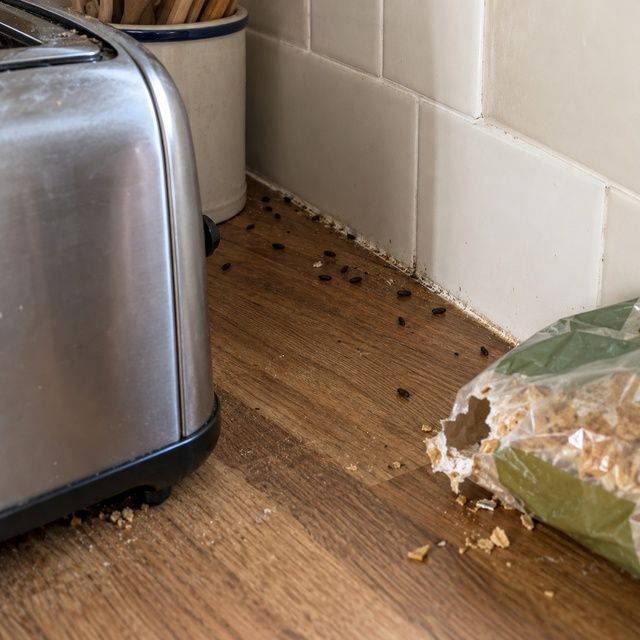
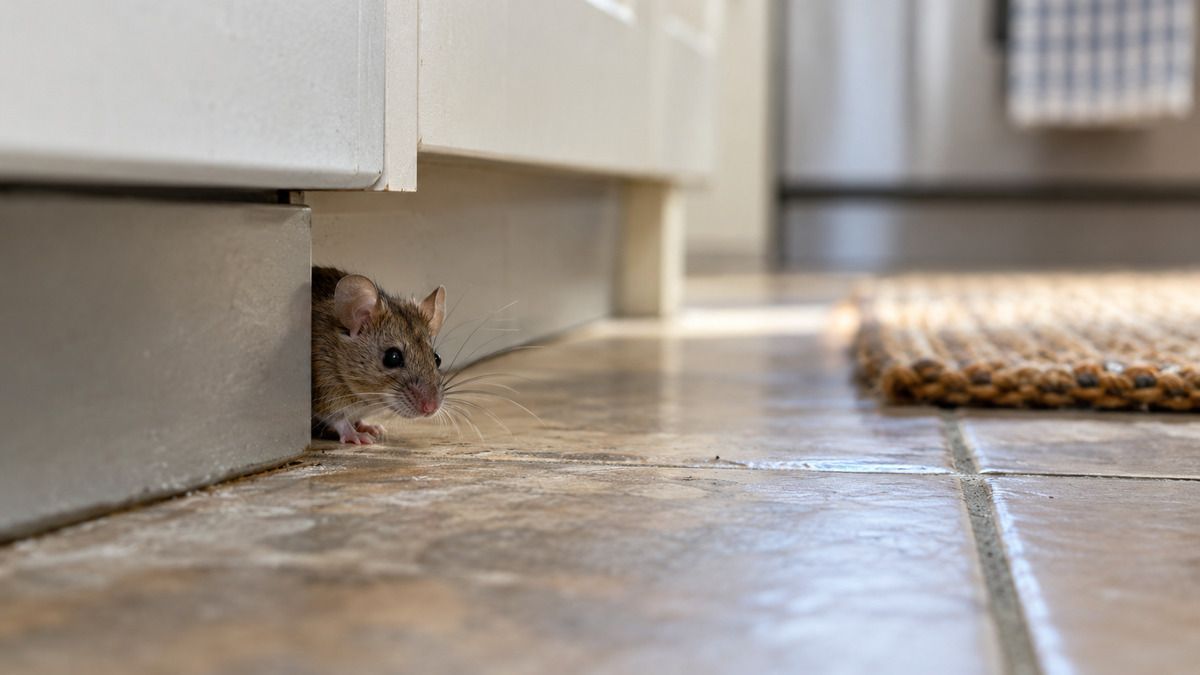
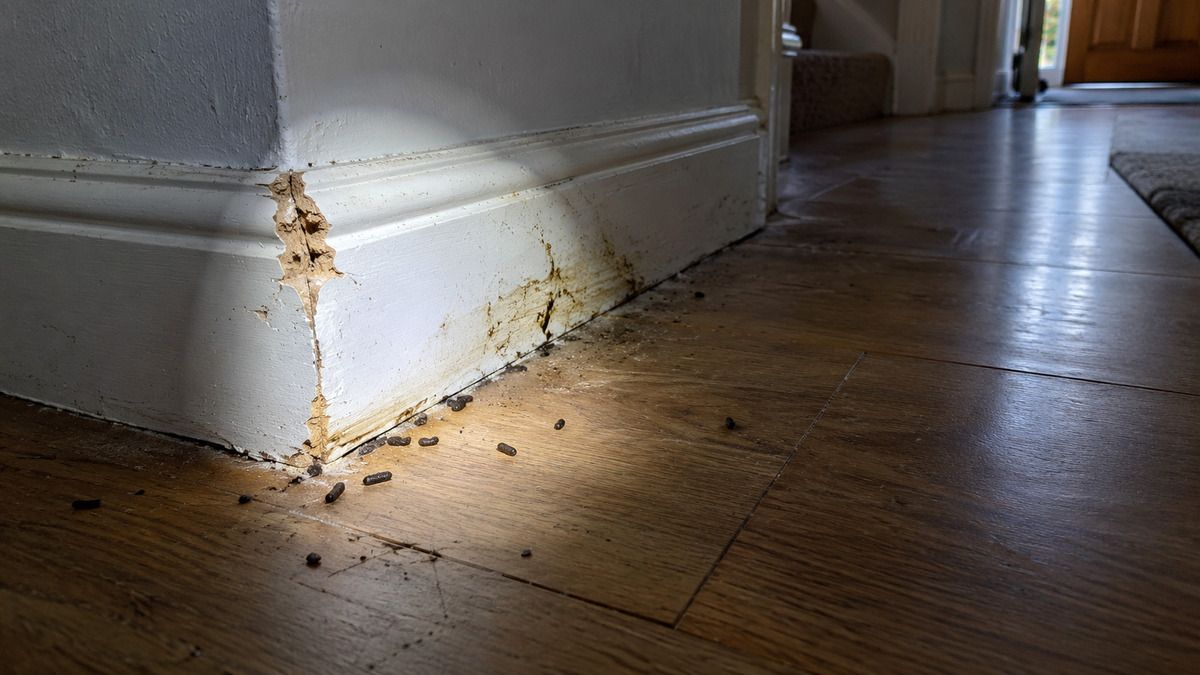
House mice announce themselves in small ways. The droppings are dark, about the size of a grain of rice, and turn up in drawers, along the back of the worktop and under the toaster. Cereal boxes and crisp packets get a neat hole chewed in the corner, and the cupboard under the sink takes on a musty smell that does not wash out. You may hear a light scratching behind the fridge or in the wall at night. Describe where the droppings are and we reply with one fixed price for the treatment.
A mouse gets through a gap the width of a pencil, so the usual way in is the hole cut for a pipe behind the washing machine, the space under a badly fitting back door or a crack where the floor meets the skirting. From there they move through the wall cavities and under the floors, and a single kitchen can be reached from a nest two rooms away. Unlike rats, mice are curious and investigate anything new within hours, so a treatment often shows results quickly. Larger droppings and heavier gnawing point to rats instead.
We price the treatment from what you tell us about the signs and the rooms affected. The figure covers the survey, the first visit and the follow-ups, and nothing is added on the day. On the first visit the technician decides whether snap traps or tamper-resistant bait stations suit the property better, which depends on where the activity is and whether there are pets or young children. A standard mouse treatment is typically 2 to 3 visits over 2 to 3 weeks. Sealing the gaps with steel mesh and sealant is quoted separately once the technician has found them, and our rodent proofing page explains what that involves.
Before you book anything, how to get rid of mice walks through the options, including shop traps and the council, and signs of rats or mice in your house helps you tell the two apart. Mice in a restaurant or shop kitchen are covered by our commercial rodent control page, with a written report after each visit. Next-day visits are offered wherever possible, so a message first thing often means a technician the following morning.
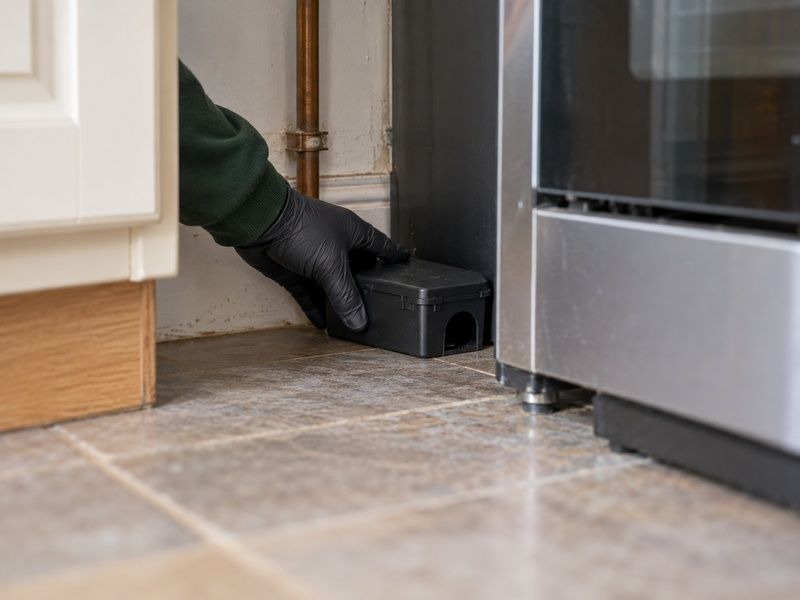
One fixed price for every visit
Your description gets one figure that covers the first visit and the follow-ups. Proofing is quoted separately on the first visit once the technician has found the gaps.
What the treatment includes
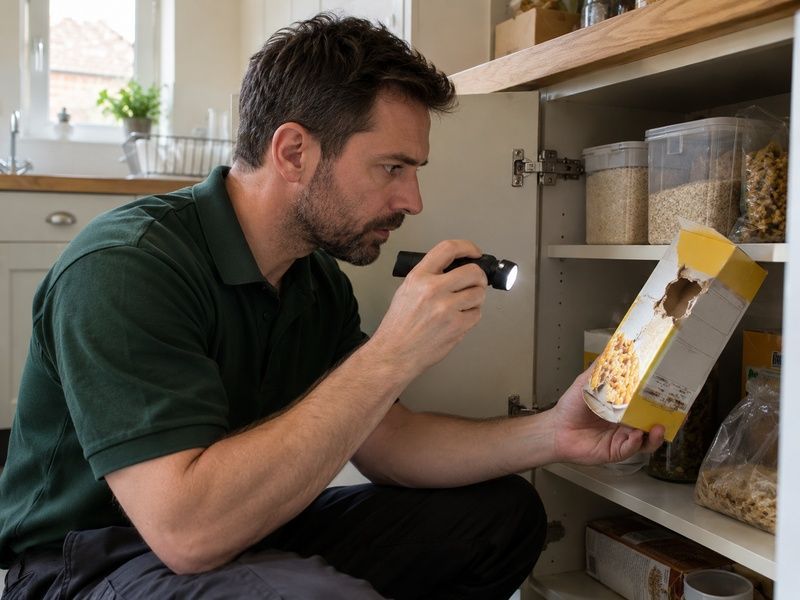
What the treatment covers
- Survey of kitchen, walls and floors
- Mice confirmed from droppings
- Snap traps or bait stations
- Follow-up visits included
- Dead mice found and removed
- Advice on mesh and sealant
- Written summary when done
- Advice on cleaning up safely
What the technician does on the visit
- Pulls out the fridge and cooker
- Checks pipe holes behind appliances
- Looks inside the base units
- Follows droppings to the nest
- Checks the gap under the doors
- Sets traps or stations on the runs
- Shows you where each one is
- Explains what to do until next time
How a mouse treatment works
-
Describe the problem
Tell us where the droppings or the gnawed packets are, which rooms are affected, when you hear the noises and whether you have pets, and send it through the form.
-
Get a fixed price
We reply by email with one figure for the first visit and the follow-ups. The price is for the whole treatment, not a single call-out, and nothing changes on the day.
-
The first visit
The technician pulls out the appliances, confirms mice from the droppings, finds the gaps they are using and sets snap traps or bait stations along the runs.
-
The follow-ups
Traps and stations are checked and reset, dead mice are removed, fresh signs are looked for, and you get a summary of what was found and what to seal.
Why people use us
Follow-ups in the price
Mice breed quickly and a nest is rarely cleared in one visit. The figure we send covers the return visits, so there is no second bill to think about.
The right method for the house
Snap traps where a quick result is wanted and there are no pets to worry about, tamper-resistant bait stations where there are. The technician decides on the day.
A CPD registered contractor
The national company that carries out our mouse treatments is a BPCA member, CPD registered so the technicians stay current on methods, and British Safety Council and ISO 9001 certified.
The gaps get pointed out
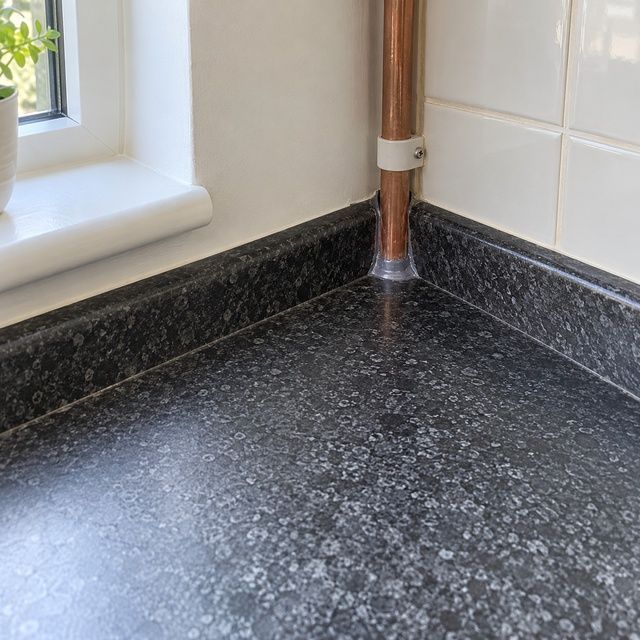
A mouse treatment is only half the job if the pencil-width gap behind the dishwasher stays open. The technician finds it and quotes the mesh and sealant.
What happens on a mouse treatment
Mice live close to their food, so the first visit starts in the kitchen. The technician pulls out the fridge, cooker and washing machine, checks the holes cut for pipes and cables, and looks inside the base units and the kickboard void for droppings, nesting material and the greasy marks mice leave along a run. The droppings confirm it is house mice rather than young rats. Snap traps or tamper-resistant bait stations are then placed on the runs, tight against the wall where mice travel, and because mice are curious they usually investigate within the first night or two. Where the signs lead into a wall cavity or under the floor, stations go at the points where mice come and go.
Before the visit, empty the cupboard under the sink and the base unit nearest the droppings so the back panel can be seen, and leave the droppings in place until the technician has looked at them, since a fresh dropping and an old one tell a different story. Write down where you have heard noises and at what time of night. Food that mice have reached needs to go in sealed containers, crumbs behind the toaster need clearing, and pet bowls should be lifted overnight. If you have children or animals in the house, say so on the form so the technician can choose the method and place everything out of reach. Avoid putting down shop traps or bait in the meantime, as it confuses the signs.
On the follow-up visits the technician empties and resets the traps, checks and refreshes the stations, removes any dead mice and looks for new droppings in the places that were busy last time. Dead mice and spent bait are taken away under the contractor's waste carrier licence for England and Wales. A standard treatment is typically 2 to 3 visits over 2 to 3 weeks. When fresh signs have stopped, you get a written summary of where the mice were getting in, what was done and which gaps need steel mesh and sealant. That proofing is quoted separately. We also advise on cleaning droppings safely, with gloves and a disinfectant rather than a dry brush that lifts dust.
Before and after
Other rodent problems we deal with
-
Rats
Brown rats in and around the house
Find out more -
Noises in the loft
Scratching at night, droppings on insulation
Find out more -
Proofing
Sealing the gaps they get in through
Find out more -
Business premises
Restaurants, shops, landlords, contracts
Find out more -
Not sure what it is?
Describe what you have found
Find out more -
Garden, shed and decking
Burrows, compost bins, bird feeders
Find out more
View every rodent service
-
A BPCA member contractor The company that does the work is a BPCA member and CPD registered
-
Fixed price by email One figure for the whole treatment, nothing added on the day
-
Follow-up visits included A standard treatment is 2 to 3 visits over 2 to 3 weeks
-
Safety assessed firms ISO 9001, British Safety Council, SSIP and SafeContractor
Guides that go with this
Mouse control questions
How do I know it is mice and not rats?
Mouse droppings are small, dark and pointed at the ends, roughly the size of a grain of rice, and there are a lot of them. Rat droppings are two or three times larger and fewer. Mice also leave a musty smell and tiny gnaw marks on packets, where rats chew through wood and plastic. Describe them on the form and we tell you.
Do you use traps or poison for mice?
Either, depending on the house. Snap traps give a quick result and suit homes with pets and children, since nothing is eaten. Tamper-resistant bait stations suit mice living in cavities where traps cannot reach. The technician decides on the first visit and explains why, and bait is never left loose.
Do you use glue traps?
No. We do not use them, and the public may not use them either in England, Wales or Scotland. Snap traps are legal for householders, must be an approved type and need checking regularly under the Animal Welfare Act 2006. Our traps are checked on every follow-up visit.
How quickly will the mice be gone?
Mice are curious and usually find a trap or station within a night or two, so the first results come quickly. Clearing a nest in a wall takes longer, and a standard treatment is typically 2 to 3 visits over 2 to 3 weeks. We do not promise a date, because it depends on how many there are and how they are getting in.
Where are the mice getting in?
Anywhere a pencil fits. The hole around a pipe behind an appliance, the gap under a back door, a crack beside a skirting board or an unfilled airbrick are the usual spots. The technician searches for them on the first visit and quotes steel mesh and sealant to close them.
Can I just clean up and hope they go?
Keeping food sealed and crumbs cleared makes the house less attractive, and it helps the treatment, but mice already nesting in a cavity do not leave because the kitchen is tidy. Droppings can carry salmonella, so wear gloves, use a disinfectant and avoid dry sweeping. See a GP if you feel unwell after contact.
Tell us where the droppings are and get a price for the mouse treatment
Use the form above, or email hello@rodent-control.uk with your postcode and what you have found. We reply with a fixed price and the earliest visit we have.