
- Home
- Rat control
Rat control
Tell us where you have found droppings or gnawing and when the noises start, and we reply with one fixed price for a rat treatment that includes the follow-up visits.
- Brown rats in the house
- One fixed price by email
- Follow-up visits included
- Next-day where possible

Get a fixed price for the treatment
Tell us what you have seen and heard, where, and when it started, and we reply by email with a fixed price for the whole treatment.
Sent.
Prefer to write? Email hello@rodent-control.uk with your postcode, your phone number and what you have found.
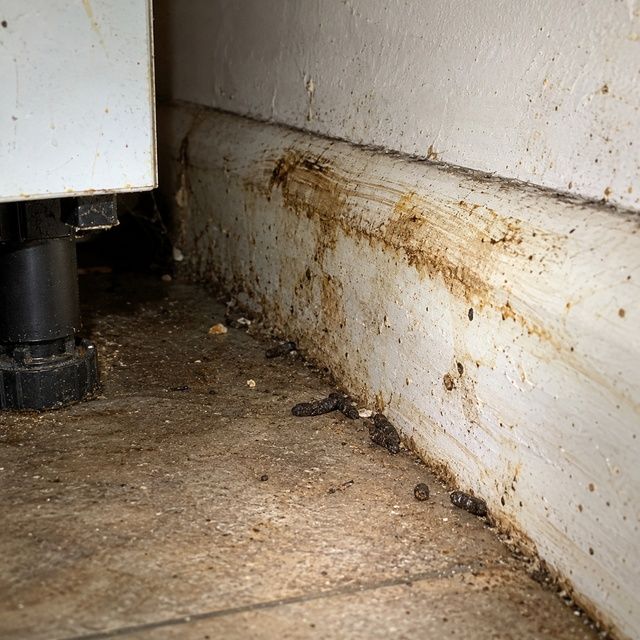
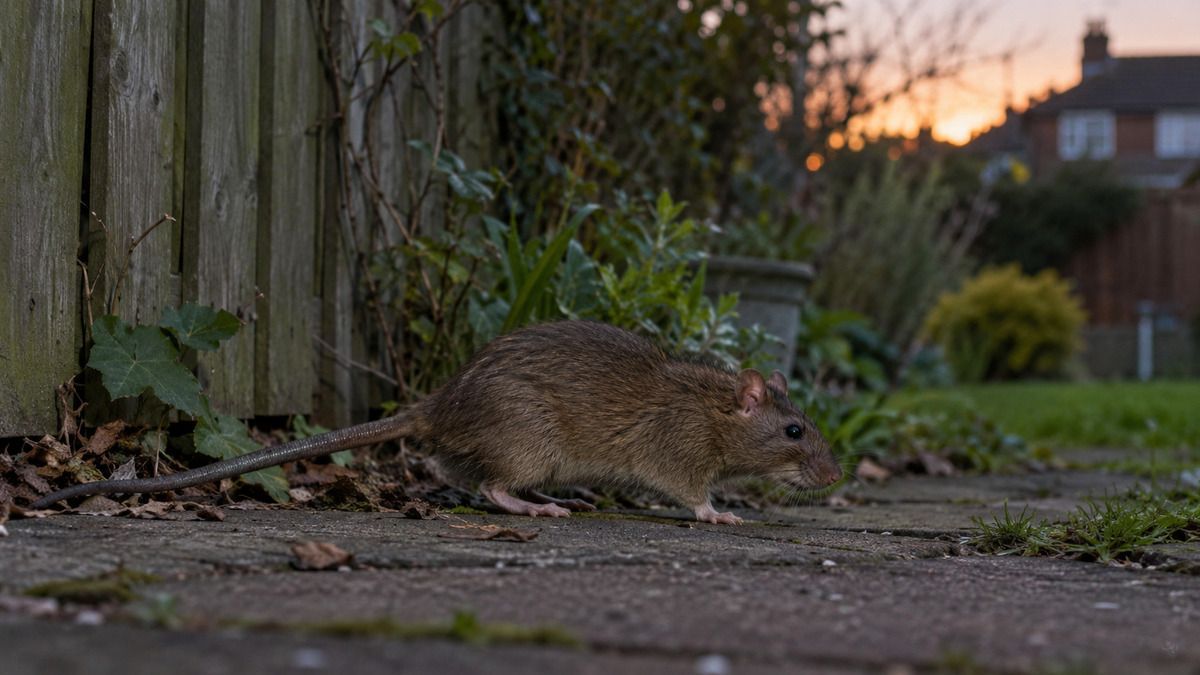
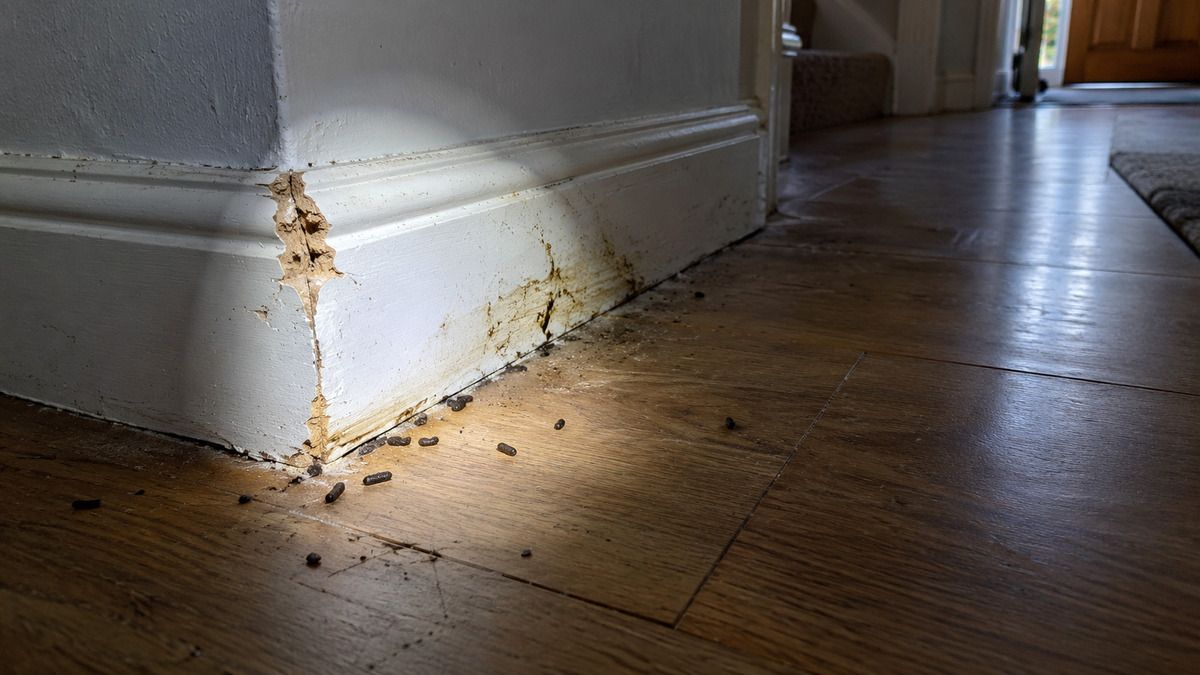
Brown rats inside a house leave a trail that is hard to miss once you know it. Droppings the size of a large grain of rice appear behind kitchen units and under the sink, something scurries beneath the floorboards after dark, and there may be a smear of grease along a skirting board where the same body has brushed past night after night. Tell us what you have seen and heard and we reply by email with one fixed price for the whole treatment, including the follow-up visits.
Most rats get into a house through the drains. A broken or redundant pipe, a missing rodding eye cover or a damaged interceptor gives them a dry route straight under the floor, and from there they climb into wall cavities and come out behind the kitchen units. Other entry points are gaps around pipes, broken airbricks and doors that do not close properly. A rat only needs a gap the width of a thumb. If the noise is coming from above you, our rats and mice in the loft page covers that, and the garden page deals with burrows, bins and sheds outside.
The treatment is priced from what you tell us on the form. Tell us where the signs are, how long it has been going on and whether you have pets or small children, and the figure we send covers the survey, the first visit and the follow-ups, with nothing added on the day. A standard rat treatment is usually 2 to 3 visits over 2 to 3 weeks, because rats are wary of anything new and bait can sit untouched for several days before they trust it. Proofing is quoted separately on the first visit once the technician has found the way in; see rodent proofing for what that involves.
If you are not sure whether you have rats or mice, the guide on signs of rats or mice in your house compares the droppings, the noises and the damage, and how to get rid of rats sets out every option, from the council to shop products to a professional treatment. Smaller droppings and a musty smell usually point to mice, which have a page of their own. Next-day visits are offered wherever possible, and sending your details early in the day gives you the best chance of one.
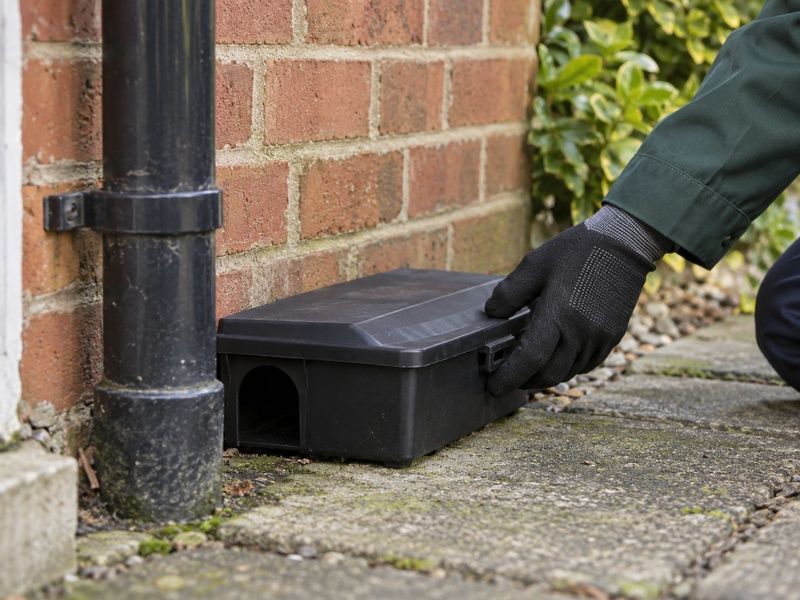
One fixed price from your description
The price we send covers the first visit and the follow-ups. If the technician finds the way in, proofing is quoted separately on the day and you decide whether to go ahead.
What the treatment includes
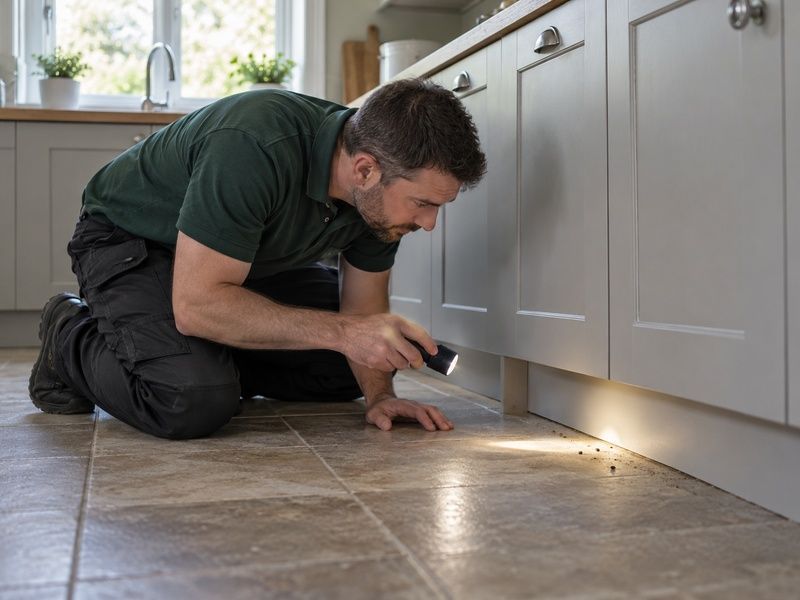
What the treatment covers
- Survey of the whole property
- Species confirmed from the signs
- Tamper-resistant bait stations
- Follow-up visits in the price
- Carcass search and removal
- Advice on sealing the entry point
- Written summary at the end
- Guidance on sanitising the area
What the technician does on the visit
- Checks drains and rodding eyes
- Lifts hatches and looks under floors
- Pulls out the kickboards
- Follows grease marks and runs
- Checks airbricks and pipe gaps
- Sets stations where rats are active
- Tells you what to do between visits
- Books the first follow-up
How a rat treatment works
-
Tell us what you have found
Fill in the form with where the droppings are, what has been gnawed, when the scratching starts and your postcode, and whether there are pets or children in the house.
-
Get a fixed price
We reply by email with one figure for the whole rat treatment. The follow-up visits are already in it, and nothing is added when the technician arrives.
-
The first visit
The technician surveys the house, confirms it is rats from the droppings and gnawing, searches for the entry point and sets tamper-resistant bait stations where there is activity.
-
The follow-ups
Over the next 2 to 3 weeks the stations are checked and refreshed, carcasses are searched for and removed, and you get a summary of what was found and what proofing would stop it.
Why people use us
One price for every visit
The figure in our email covers the first visit and the follow-ups. Rats take days to trust new bait, so a treatment that stops at one visit rarely works.
Bait is never left loose
Professional rodenticides go inside tamper-resistant stations placed where rats are active, and every station is checked and refreshed on the follow-up visits.
A BPCA member contractor
The contractor who carries out your rat treatment is a BPCA member and CPD registered, ISO 9001 certified and holds a waste carrier licence for England and Wales.
The way in gets found
A rat treatment that does not find the entry point leaves the door open for the next one. The technician looks for it and quotes the proofing on the first visit.
What happens on a rat treatment
On the first visit the technician walks the whole property, inside and out, and reads the signs. Droppings, grease marks, gnawed wood and tracks in dust confirm it is brown rats rather than mice, and show where they travel. Drains get particular attention, because a broken or redundant pipe or a missing rodding eye cover is the commonest way in. Tamper-resistant bait stations are then placed along the runs, under the floor if there is a hatch, behind the kickboards and in the void beneath the bath if that is where the noise is. Rats are suspicious of anything new, so the bait is often untouched for the first few days, which is why the follow-up visits matter more than the first one.
Before the technician arrives, pull out whatever you can from under the sink and the base units so the back of the cupboards can be seen, and leave the droppings where they are until they have been looked at, because their position tells the technician where the rats are moving. Note where you have heard noises and at what time. Keep food in sealed containers and put pet food away overnight, since a rat with an easy meal has no reason to go to the stations. The stations are designed to keep children and pets out, but ask the technician to show you where each one is. Do not put down shop-bought poison in the meantime, as it muddles the signs and can make the rats bait-shy.
On each follow-up the technician checks and refreshes the stations, looks for fresh droppings and gnawing, and searches for carcasses, which are removed. A rat that has taken bait usually dies somewhere out of sight, so finding it is part of the job rather than an extra. The contractor who removes it holds a waste carrier licence for England and Wales, so the carcass and any used bait leave the house legally. A standard treatment is usually 2 to 3 visits over 2 to 3 weeks, though a busy drain run can take longer. When the activity has stopped, you get a written summary of what was found, where they were getting in and what proofing would stop it happening again. The proofing itself is quoted separately.
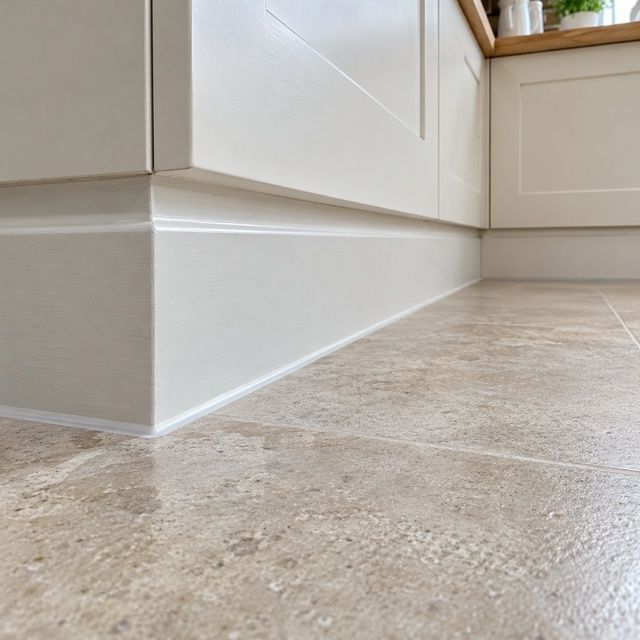
Before and after
Other rodent problems we deal with
-
Mice
House mice in kitchens and walls
Find out more -
Noises in the loft
Scratching at night, droppings on insulation
Find out more -
Garden, shed and decking
Burrows, compost bins, bird feeders
Find out more -
Proofing
Sealing the gaps they get in through
Find out more -
Business premises
Restaurants, shops, landlords, contracts
Find out more -
Not sure what it is?
Describe what you have found
Find out more
View every rodent service
-
A BPCA member contractor The company that does the work is a BPCA member and CPD registered
-
Fixed price by email One figure for the whole treatment, nothing added on the day
-
Follow-up visits included A standard treatment is 2 to 3 visits over 2 to 3 weeks
-
Safety assessed firms ISO 9001, British Safety Council, SSIP and SafeContractor
Guides that go with this
Rat control questions
How do rats get into a house?
Most come up through the drains. A cracked or redundant pipe, a missing rodding eye cover or a damaged interceptor lets them travel under the floor and into the wall cavities. Others squeeze through broken airbricks, gaps around pipes or under doors, and a rat needs no more than a gap the width of a thumb.
Why has the bait not been touched after two days?
Rats are wary of new objects and will walk around a bait station for several days before they go inside. That is normal and the reason a treatment has follow-up visits rather than one. The technician checks the stations on the next visit, and bait that has been ignored is moved to a busier run.
How long does a rat treatment take?
A standard treatment is usually 2 to 3 visits over 2 to 3 weeks, and all of them are in the fixed price. We cannot promise a date by which the rats will be gone, because it depends on how many there are and how they are getting in, but the technician tells you how it is going at each visit.
Are the bait stations safe with dogs and children in the house?
The stations are tamper-resistant boxes that keep the bait inside, and the technician places them where rats run rather than in the open. Bait is never left loose. Tell us about pets and children on the form and the technician will show you where every station is on the first visit.
Is proofing included in the price?
No. The treatment price covers the visits, the stations and the summary. Proofing is quoted separately on the first visit, once the technician has found the entry point, because the cost depends on whether it is a gap around a pipe, a broken airbrick or a drain that needs a drainage contractor.
Can rats make me ill?
Rats can carry leptospirosis, also called Weil's disease, in their urine, and their droppings can carry salmonella. Hantavirus is rare in the UK. Wear gloves if you have to touch anything, wash your hands afterwards, and see a GP if you develop flu-like symptoms after contact with droppings or urine.
Describe what you have found and get a price for the treatment
Use the form above, or email hello@rodent-control.uk with your postcode and what you have found. We reply with a fixed price and the earliest visit we have.