What affects the cost of rodent control
Two rodent jobs that sound the same on the phone can need very different amounts of work. One is a single mouse in a terraced kitchen; the other is rats under a large garden with a broken drain beneath it. This guide sets out what moves the price up or down, so you know what you are paying for and how to compare quotes.
Key points
- The species, the size of the property and the number of visits needed are the biggest factors in the price of a treatment.
- Garden and loft work, business premises that need a report and problems that have been running for months all add to the job.
- Proofing is separate from the treatment and is quoted on the first visit once the technician has found the way in.
- A fixed price from your description works because where you found the droppings, what you have heard and when it started tell us the species and the scale before anyone comes out.
- Compare quotes on what is included: the visits, the stations, the follow-ups, the proofing advice and the report.
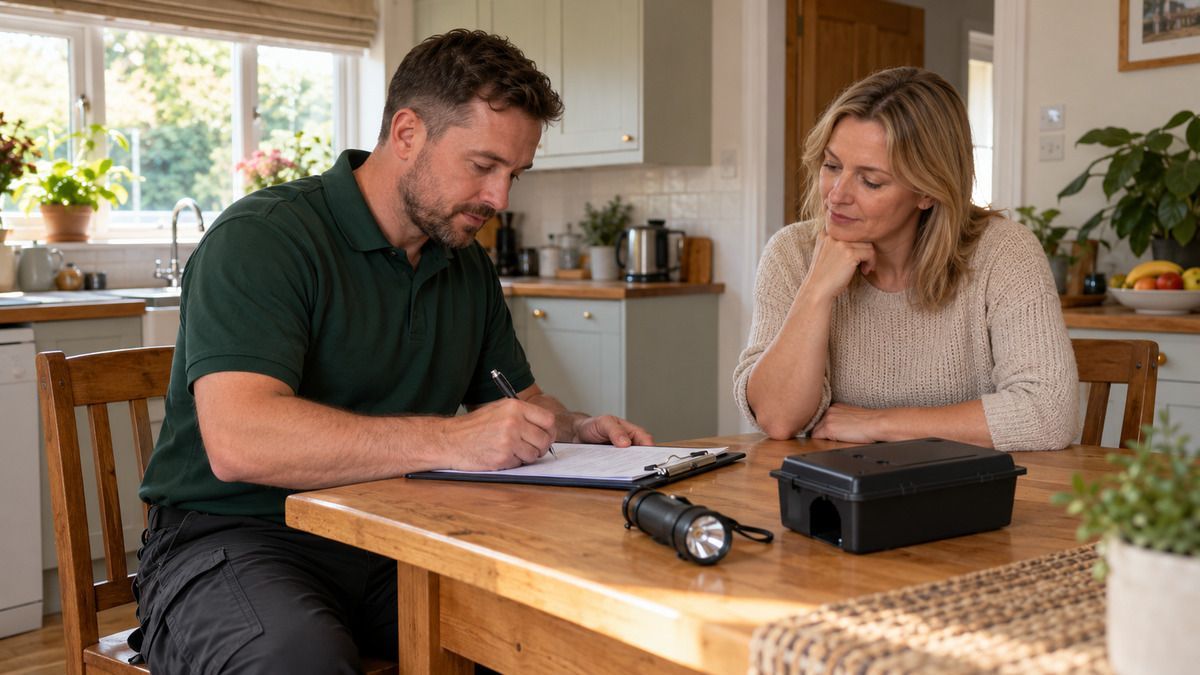
What affects the cost of rodent control: the short answer
The price of a rodent treatment comes down to how much work it will take to clear the problem and keep it cleared. That depends on the species, the size and layout of the property, how many visits the job needs, whether the activity is inside, in the garden or in the loft, and whether the premises are a home or a business. A long-running problem costs more than a new one because there are more animals to deal with.
Proofing sits outside the treatment. Sealing the gaps is physical work that cannot be priced until someone has found them, so it is quoted separately on the first visit. This guide takes each factor in turn, explains how we arrive at one fixed price from what you tell us, and ends with what to look for when you compare quotes.
Species, size of property and number of visits
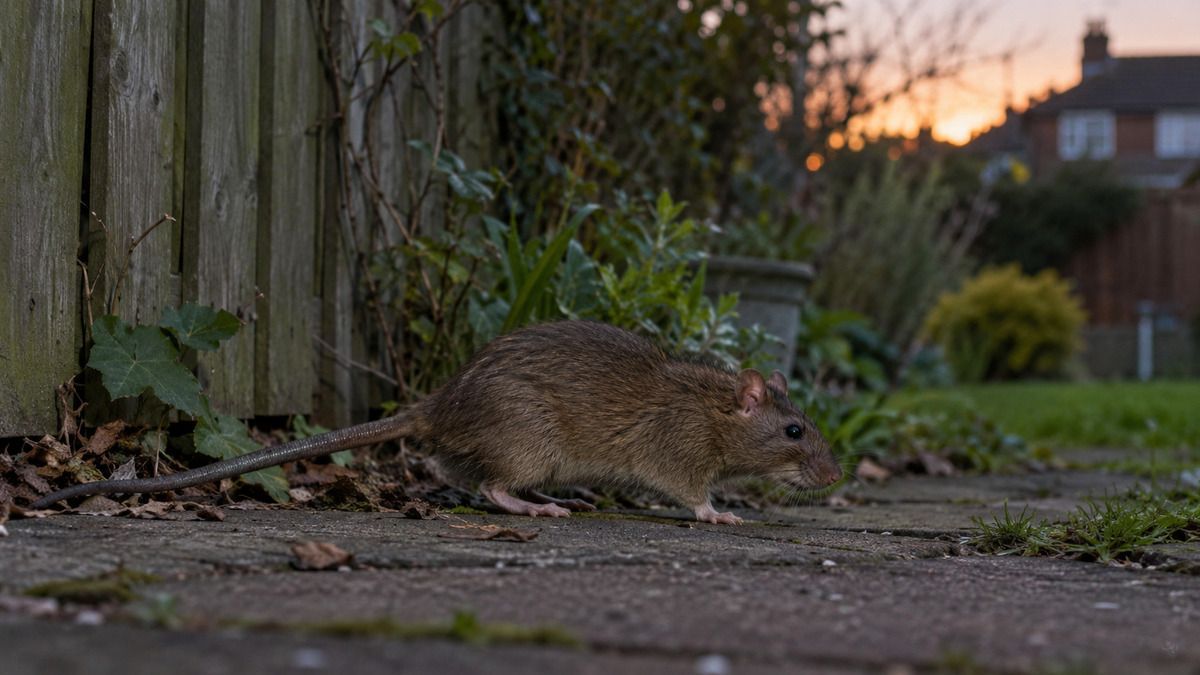
Rats and mice are treated differently, and squirrels differently again. Rats are wary of new objects, so a rat treatment needs the stations to stay in place across several visits while the colony gets used to them. Mice investigate quickly but spread through a building, so the job is often about finding every area they use. Grey squirrels are trapped in the loft, and the traps have to be checked regularly.
The size of the property sets how long the survey takes and how many stations or traps are needed. A two-bedroom flat with mice behind the kitchen units is a small job. A detached house with a large garden, outbuildings and a loft is a bigger one, because there are more places to check and more routes in. A standard rat or mouse treatment is usually 2 to 3 visits over 2 to 3 weeks, and an unusually heavy infestation may need more.
Want one figure for the whole treatment?
Tell us what you have found, where it is and when it started. We reply by email with a fixed price that covers the first visit, the follow-ups, a carcass search and a written summary.
Inside, in the garden, in the loft or at a business
Work in the garden is more exposed than work indoors. Stations have to be secured against weather, pets and foxes, burrows under decking or sheds have to be found, and the source, such as a bird feeder, a compost bin or a chicken run, has to be identified. A loft adds its own time. If the hatch is small, there is no ladder or the space is unboarded, the technician moves slowly across the joists and the search for droppings and gnawed cables takes longer.
Business premises are priced differently because the job is different. A restaurant kitchen, a shop stockroom or a block managed by a letting agent needs a written report after each visit, a treatment plan that works around trading hours and, often, an ongoing contract rather than a one-off treatment. Our commercial rodent control page sets out what that covers.
Proofing, how long it has been going on, and shared buildings
Proofing is the work that stops them coming back: steel mesh over a gap, cement around a pipe, a brush strip under a door, a cover on an airbrick, or a repair to a damaged drain by a drainage contractor. It is quoted on the first visit, once the technician has found the way in, so you can decide separately whether to go ahead. There is more on the rodent proofing page.
How long the problem has been going matters more than people expect. Rats and mice breed fast, so droppings first noticed months ago usually mean a much larger population than a sighting last week. Flats and shared buildings add another layer. A shared loft, a communal bin store or a service duct that runs through several homes means the rodents may be coming from somewhere you do not control, and the treatment may need the managing agent or the neighbours on board.
Why a fixed price from your description works
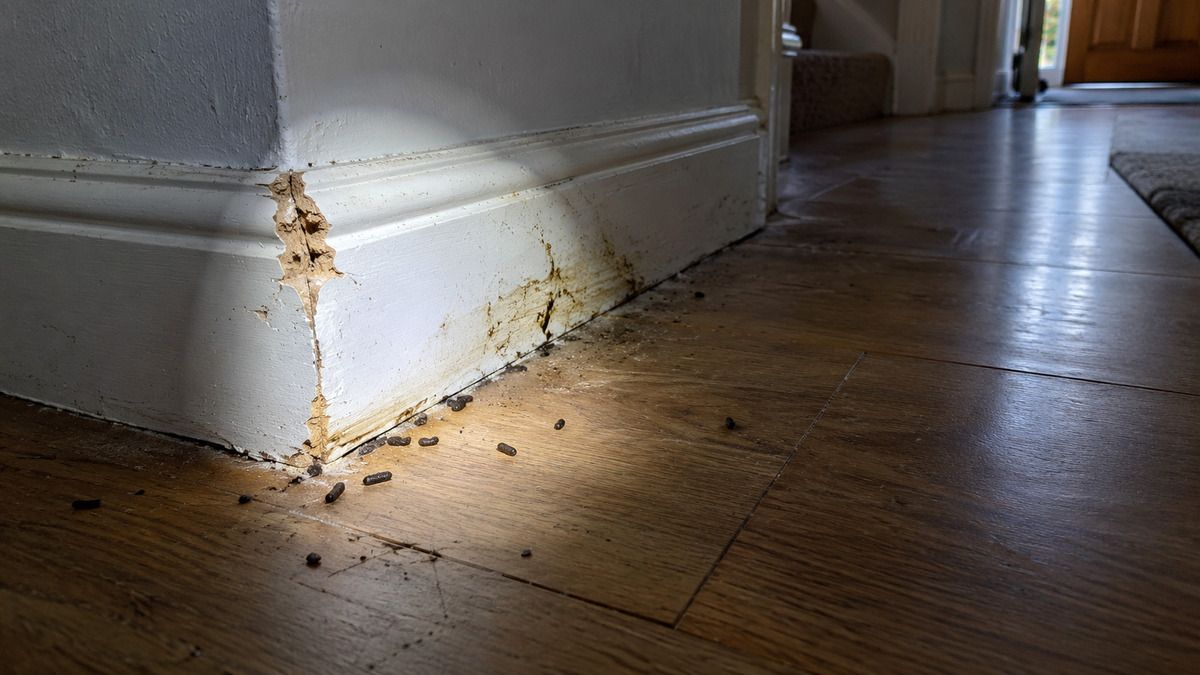
Most of the factors above come through in a plain description. Small pointed droppings in large numbers point to mice, while larger, blunter ones in a few places point to rats, and scratching overhead in daylight points to squirrels. Where you found a gnawed cable, a hole in a skirting board or a burrow by the shed tells us where the activity is, and when you first noticed it tells us roughly how long it has been running. Your postcode and the type of property fill in the rest. From that we reply by email with one figure for the whole treatment.
That figure covers the survey, the first visit, the follow-up visits, a search for carcasses on each return and a written summary at the end of what was found and what proofing would stop it. Nothing is added on the day. If what you describe sounds unusual we say so in the email, so there are no conversations about extras when the technician arrives, and if the first visit turns up something different from your account the technician explains it before any further work is agreed. If you are not sure what you have found, the signs of rats or mice guide will help you describe it.
What to compare between quotes
A low figure for a single visit is not the same as a price for a treatment. Ask each firm how many visits are included, and whether the follow-ups are extra. Ask whether bait is placed in tamper-resistant stations, whether the stations are collected at the end, and whether anyone comes back to search for carcasses. Ask whether proofing advice is part of the job and whether you get anything in writing. It is also reasonable to ask any firm whether it is a BPCA member. The national company that carries out our treatments is a BPCA member and CPD registered, certified to ISO 9001 and by the British Safety Council, SafeContractor approved and licensed to carry waste in England and Wales.
Then put the council alongside the private quotes. Your council may offer a pest control service, usually for a charge and with a waiting time, and some reduce the charge for people on certain benefits. The trade-off is the wait and the set number of visits. Does the council do pest control explains how to check what yours offers.
False economies
Shop-bought poison is the first. The products sold to the public are weaker and come in small packs, rats avoid new bait for days and may be resistant to it, and nobody comes back to find the carcass or seal the gap. Many people spend on two or three boxes, lose a month, and then book a treatment for a bigger problem than they started with.
A single visit is the second. If a firm offers one call-out with no follow-up, the stations are either left unattended or taken away before the job is done, and the entry point is never addressed. Paying once for a full treatment with the follow-ups included is almost always the better use of the money. If you want one price for whatever you have found, start with our rodent control services page and describe the problem.

Questions people ask
How can you give a fixed price without seeing the problem?
Because what you describe tells us most of what a survey would confirm: the species from the droppings and the noises, the scale from how long it has been going on and where it is, and the setting from the property type and postcode. That is enough for one fixed figure for the whole treatment rather than an estimate that changes on the day.
Is proofing included in the treatment price?
No. Proofing is quoted separately on the first visit, once the technician has found the way in and can see what sealing it involves. Advice on what proofing would stop them coming back is included in every treatment, so you can decide with the facts in front of you.
Does a bigger house always cost more?
Usually, because the survey takes longer and more stations or traps are needed, but the scale of the activity matters as much as the floor area. A small flat with a long-running mouse problem can be more work than a large house where a single rat has got into the garage.
Is the council cheaper than a private treatment?
It depends on your council. Some charge a fee for a set number of visits, some have concessions for people on benefits, and some no longer treat rodents. Compare what is included and how long the wait is, not just the figure. Our guide on council pest control explains what to check.
Get a fixed price for your rodent problem
Say in the form where you found the droppings or the damage, when the noises start and your postcode. We reply with one price for the whole treatment.
- Fixed price by email
- Follow-up visits included
- A BPCA member contractor
- Next day where possible

Get a fixed price for the treatment
Tell us what you have seen and heard, where, and when it started, and we reply by email with a fixed price for the whole treatment.
Sent.
Prefer to write? Email hello@rodent-control.uk with your postcode, your phone number and what you have found.