
- Home
- Rodent proofing
Rodent proofing
Once the treatment has dealt with the rats or mice, proofing closes the gaps they used so the next lot cannot follow. Quoted on the first visit, priced on its own.
- Quoted on the first visit
- Steel mesh and cement
- Airbricks, vents and eaves
- Priced separately

Get a fixed price for the treatment
Tell us what you have seen and heard, where, and when it started, and we reply by email with a fixed price for the whole treatment.
Sent.
Prefer to write? Email hello@rodent-control.uk with your postcode, your phone number and what you have found.
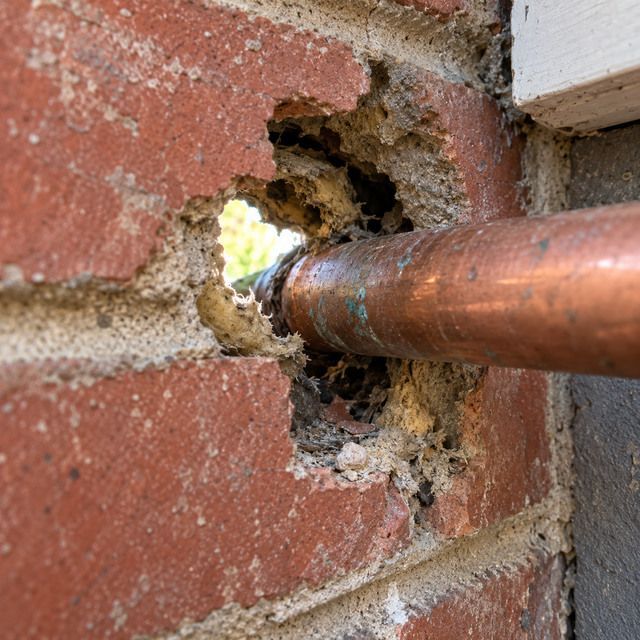
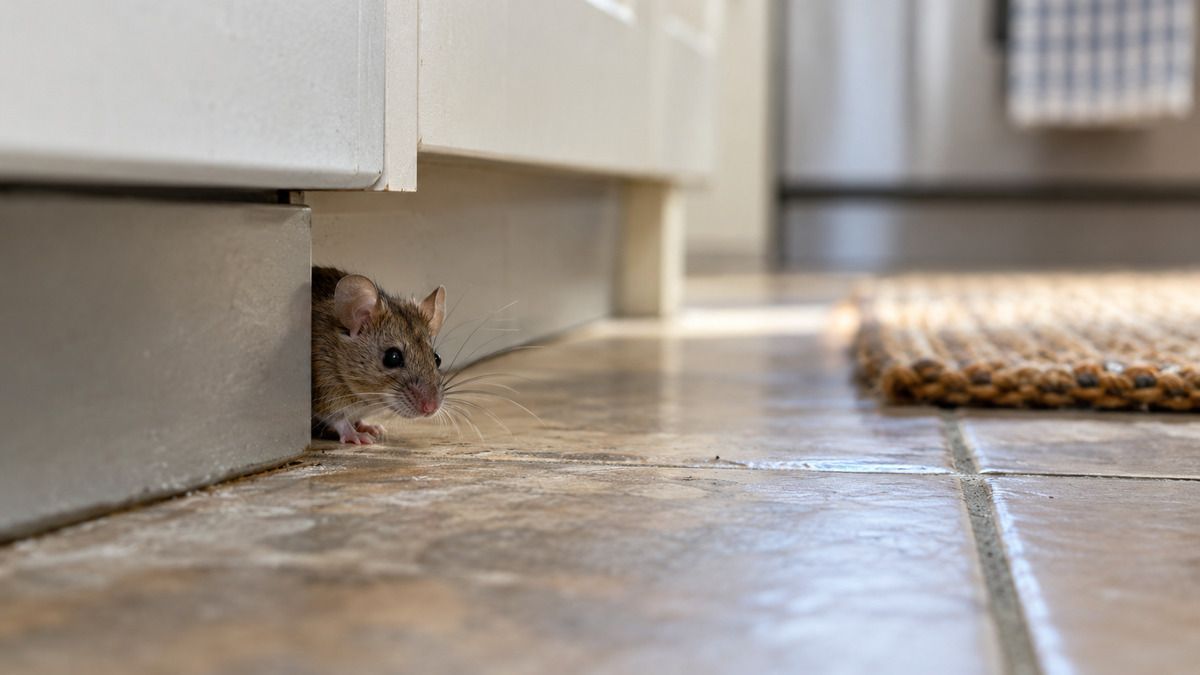
Rodent proofing is the part of the job that stops the problem coming back. A treatment removes the rats or mice that are there now, but the gap they came through is still open, and the next animal to find it walks straight in. A mouse gets through a gap the width of a pencil and a rat through one the width of a thumb, which is why a hole around a waste pipe, a broken airbrick or a worn brush strip under a back door is enough. Proofing finds those gaps and seals them with materials rodents cannot chew.
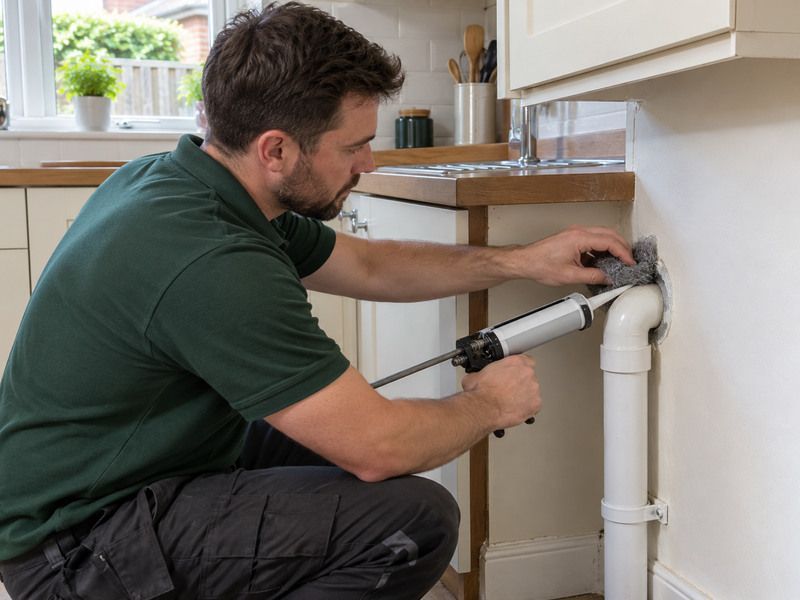
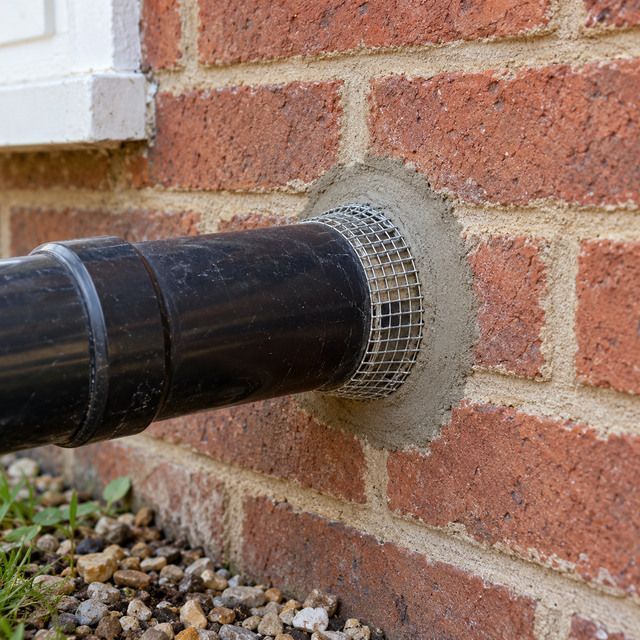
The search for entry points happens on the first visit of a rat or mouse treatment, when the technician follows the droppings, grease marks and gnawing back to where they get in. Pipes through walls are packed with steel mesh and finished with cement. Airbricks get a cover that still lets air through. Doors get a brush strip along the bottom, vents get a mesh and the gaps at the eaves and soffits that let rodents into the loft are closed. Drain defects are pointed out, and the repair goes to a drainage contractor.
Proofing is quoted on the first visit, once the technician has seen the property and found the way in, and it is priced separately from the treatment. You get a figure for the sealing work before any of it starts, and you choose whether to go ahead. Tell us about any gap you have already spotted, such as a hole behind the washing machine or daylight under the garage door, and we can give you an idea of what the proofing is likely to involve. The guide to what affects the cost of rodent control covers why proofing varies so much from one house to the next.
Some homes need proofing on its own, usually after a treatment elsewhere or in a flat where the neighbours have had mice. We do that too, and the form has a proofing-only option. Lofts are the most common place rodents get in unseen, and the rats and mice in the loft page describes how that is found. For the wider story on mice, including why a treatment with follow-ups finds the source where traps alone do not, read how to get rid of mice.
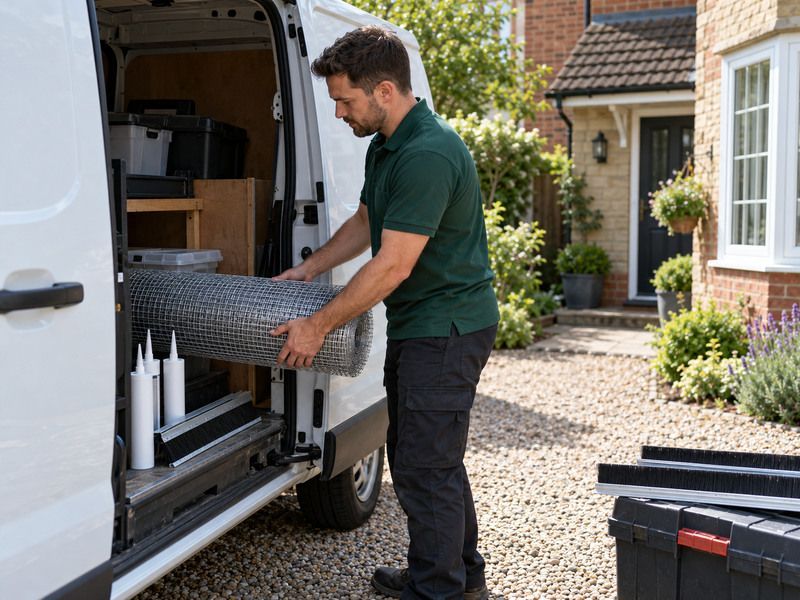
One fixed price, proofing quoted on site
The treatment price you get from your description covers the first visit and the follow-ups. The proofing is a separate figure, given on the first visit once the technician has found the way in.
What the treatment includes
What the treatment covers
- Survey of the whole property
- Species identified from the signs
- Bait stations or traps where needed
- Follow-up visits included
- Carcass search and removal
- Every entry point listed for you
- Written summary with the proofing plan
- Advice on sanitising sealed areas
What the technician does on the visit
- Traces droppings and grease marks to the gap
- Checks pipes where they pass through walls
- Inspects airbricks and wall vents
- Looks at door thresholds and garage doors
- Checks the eaves, soffits and fascia
- Looks at drain covers and rodding eyes
- Measures each gap for mesh or cement
- Prices the proofing before leaving
How rodent proofing works
-
Tell us what you have found
Describe the gap if you have found it, or the droppings and gnawing if you have not, and say where they are. Tell us whether you want proofing with a treatment or on its own.
-
Get a fixed price
We reply by email with a fixed price for the treatment. Proofing is quoted on the first visit, so the email tells you how that figure will be worked out.
-
The first visit
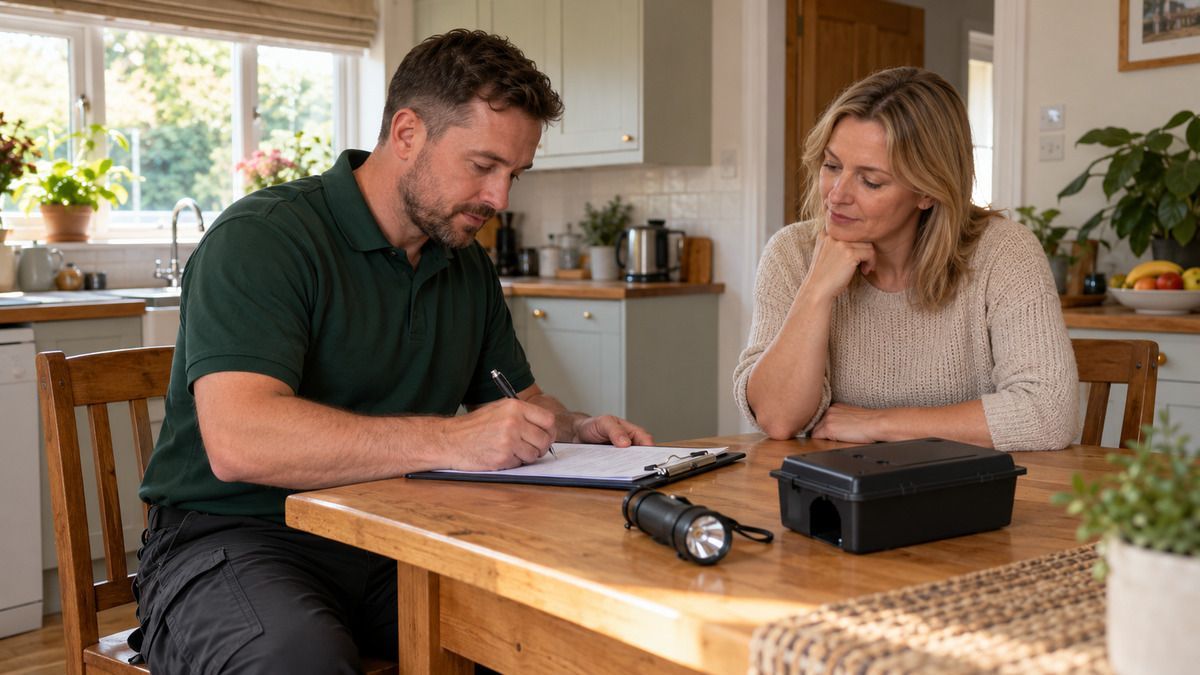
The technician surveys the property, finds every entry point they can reach and tells you what sealing each one involves. You get a proofing price on the spot.
-
The sealing work
With your go-ahead the gaps are sealed with steel mesh, cement, airbrick covers, vent mesh or brush strips, and the follow-up visits confirm nothing is still getting in.
Why people use us
Found before it is priced
Nobody can price proofing from the street. The figure is given on the first visit after the technician has traced the droppings and gnawing back to the gap.
Materials they cannot chew
Rats and mice gnaw through foam, plastic and soft filler. We use steel mesh, cement and metal airbrick covers that stay in place for the long term.
Separate from the treatment
The treatment has its own fixed price with the follow-ups included. Proofing is a second figure, so you can see what the sealing costs and decide on it.
A BPCA member contractor
The technicians who seal the gaps work for one national company that is a BPCA member and CPD registered, ISO 9001 certified and British Safety Council certified. It is the only firm we use, and it holds all of these.
What proofing a house involves
Finding the gap comes first. Rodents leave grease marks where their fur rubs the same route each night, droppings collect where they pause, and gnaw marks show on timber and plastic beside the hole. The technician follows those signs from the kitchen or loft back to the outside wall. Common entry points are the hole where a waste pipe or a gas pipe passes through brickwork, a cracked airbrick, the space under a warped back door, a vent with no mesh and the gap where the soffit meets the wall at the eaves. Each one is sealed in a way that suits it: steel mesh packed into the hole and cemented over, a cover on the airbrick, a brush strip on the door, mesh on the vent.
Make the walls and pipes reachable before the visit. Pull the washing machine and dishwasher forward if you can, clear the cupboard under the sink and move anything stacked against the outside walls of a garage. In the loft, leave the droppings where they are so the technician can see the route, and do not disturb the insulation along the eaves. Keep pets and children away from any stations or traps that are already in place. Note where you have heard noises or seen droppings, with the time of day, because mice heard in a kitchen wall at night and squirrels heard at dawn point to different gaps. Keep food in sealed containers until the proofing is done.
Once the gaps are sealed, the follow-up visits in the treatment check whether anything is still getting in. Fresh droppings or new gnawing at a sealed point tell the technician there is another route, and the search starts again from there. Any carcass found behind a sealed point goes out with the contractor, who holds a waste carrier licence for England and Wales. Where the entry point is a damaged drain, which is the commonest way rats reach a house, the technician explains what looks wrong and you take that to a drainage contractor for the repair. The treatment ends with a written summary listing every gap found, what was sealed and anything that still needs attention. Sanitising advice is included for areas where droppings had built up.
Before and after
Other rodent problems we deal with
-
Rats
Brown rats in and around the house
Find out more -
Mice
House mice in kitchens and walls
Find out more -
Noises in the loft
Scratching at night, droppings on insulation
Find out more -
Garden, shed and decking
Burrows, compost bins, bird feeders
Find out more -
Squirrels
Grey squirrels in the loft and roof
Find out more -
Business premises
Restaurants, shops, landlords, contracts
Find out more
View every rodent service
-
A BPCA member contractor The company that does the work is a BPCA member and CPD registered
-
Fixed price by email One figure for the whole treatment, nothing added on the day
-
Follow-up visits included A standard treatment is 2 to 3 visits over 2 to 3 weeks
-
Safety assessed firms ISO 9001, British Safety Council, SSIP and SafeContractor
Guides that go with this
Rodent proofing questions
Why is proofing not included in the treatment price?
Because nobody knows what proofing is needed until the technician has found the way in. One house needs a single pipe sealed, another needs airbrick covers on three walls and work at the eaves. Pricing it on the first visit means you pay for the gaps your house has, not an average.
Can I just fill the hole with expanding foam?
Foam slows them for a night or two. Rats and mice chew through foam, plastic and soft filler, and a rat only needs a thumb-width gap to get back in. Steel mesh packed into the hole and finished with cement is what holds, which is why the technician uses that rather than filler.
Do you proof without doing a treatment?
Yes. Choose proofing only on the form and describe the gap or the signs you have found. The technician still surveys the property to find every entry point, because sealing the one you have spotted while another stays open leaves the problem where it was. The price is given on that visit.
How do rodents get into a loft?
Usually at the eaves, where the soffit meets the wall, through a gap behind the fascia or along a cable or pipe that enters the roof space. Rats also climb inside cavity walls from a broken airbrick or a drain. The technician checks the roofline from outside and the eaves from inside the loft.
Do you repair drains?
No. If the technician finds a broken pipe, a missing rodding eye cover or a damaged interceptor, you are told what looks wrong and pointed to a drainage contractor for the repair. We seal the gaps in the building and treat the rodents; the drain work needs a drainage contractor.
Will the proofing stop them for good?
A sealed gap stays sealed, but a house changes. A new pipe, a rotted door frame or a broken airbrick can open a fresh route. The summary lists the points to keep an eye on, and if you see signs again, tell us what you have found and the technician looks for the new way in.
Tell us about the gap and we say what proofing it needs
Use the form above, or email hello@rodent-control.uk with your postcode and what you have found. We reply with a fixed price and the earliest visit we have.