Signs of rats or mice in your house
Rodents are good at staying hidden, so most people find the evidence long before they see the animal. Droppings, gnawing, smears, noises and smells each tell you something about what you have and where it is living. This guide explains what each sign means, how to tell rats from mice from squirrels, and what to do once you have found them.
Key points
- Droppings are the most reliable sign, and their size and shape tell you whether it is a rat or a mouse.
- Noises after dark point to rats or mice, while thumping and scampering in daylight usually means grey squirrels.
- Grease smears along skirting boards and pipes show the routes rodents use every night.
- Leave the droppings where they are and tell us where you found them, because the technician learns a lot from their position.
- Acting on the first signs keeps the treatment short, because rodents breed quickly and gnaw cables while they wait.
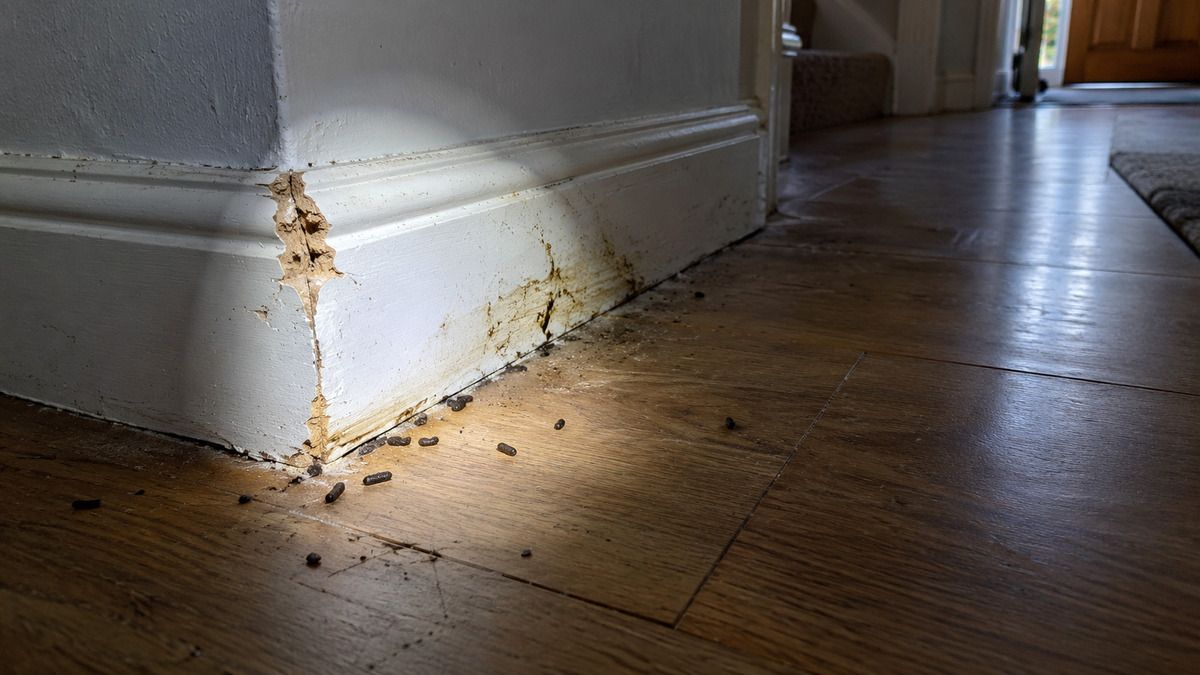
The signs of rats or mice in a house
Droppings, gnaw marks, smears, noises, smell, nests, tracks and odd behaviour from the dog or cat. Those are the eight things to check, and you rarely need all of them. Two or three together, found in the same part of the house, are enough to say you have rodents and roughly what kind.
A sighting settles it, of course, but rats and mice are nocturnal and shy, so you may never see one. If you do see a rat in daylight, it usually means there are enough of them that some are being forced to feed at awkward times. The sections below go through each sign in turn, starting with the one you are most likely to find.
Droppings: size, shape and where they are
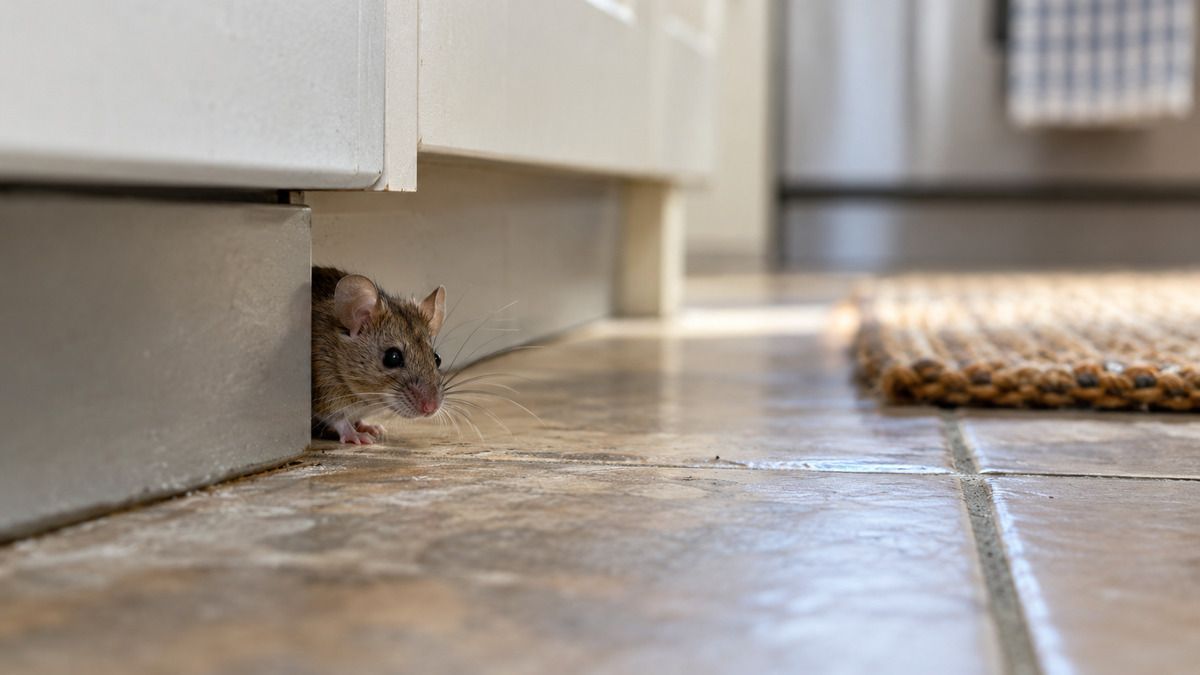
Mouse droppings are three to six millimetres long, thin and pointed at the ends, and you find a lot of them. A single mouse leaves fifty or more a night, scattered along worktops, in drawers, inside cupboards and around food. Rat droppings are much bigger, up to two centimetres, thick and often rounded or blunt at one end, and they turn up in smaller groups along the routes the rat uses.
Where you find them tells you where the animals are living and feeding. A line of droppings behind the freezer or along a skirting board is a run. A pile in one corner of the loft is a nesting area. Fresh droppings are dark, soft and slightly glossy. Older ones dry out, go grey and crumble, which helps you judge whether the problem is current or old.
Squirrel droppings are rounder and paler, a bit like rabbit droppings, and are usually found in the loft rather than in living rooms. If you cannot tell which you have, describe their size, shape and number and say where in the house they are. We can usually tell from that description.
Found something you cannot identify?
Describe the droppings, the gnawing or the hole and we reply by email with what it is likely to be and one fixed price for the treatment, follow-up visits included.
Gnawing, smears, tracks and nests
Rodents gnaw constantly to keep their front teeth short. Look for fresh, pale tooth marks on the corners of cereal boxes, on plastic food tubs, on cables in the loft and on the bottom edge of doors. Mice leave fine, clean nibbles about a millimetre wide. Rats leave coarser, deeper marks, and a rat can chew through soft wood and some plastics to widen a hole.
Grease smears are dark, oily marks left where fur rubs the same surface night after night. You see them along skirting boards, around the edge of a hole and on pipes where rodents climb. In a dusty loft or garage you may also find footprints and a tail drag mark. A light dusting of flour along a suspected run shows whether anything is still using it.
Nests are balls of shredded paper, fabric, insulation or cardboard, tucked in a drawer, behind a kickboard, under the bath, in the airing cupboard or in the loft insulation. Mice nest close to food. Rats nest in burrows outside, in wall cavities and under floors. Finding a nest with young in it tells you the problem has been there for weeks at least.
Noises, smell and pets
Timing is the clue with noises. Rats and mice move mostly at night, so scratching, scurrying and gnawing in the ceiling, walls or under the floor between dusk and dawn points to them. Grey squirrels are active in the day, especially early morning and late afternoon, and sound heavier, with thumps, rolling noises and fast scampering across the loft floor.
A sharp, musky, ammonia-like smell in a confined space such as a cupboard, a cellar or a loft hatch means rodents have been there a while. Rats smell stronger than mice. A sudden, very unpleasant smell that gets worse over a few days may be a dead rodent in a void, which is one reason a treatment includes a search for carcasses.
Pets notice before you do. A cat that sits staring at the base of a kitchen unit or a dog that paws at a skirting board and will not be called away is usually hearing something. Pay attention to where they focus, because that is where the technician should look first.
Signs outside the house
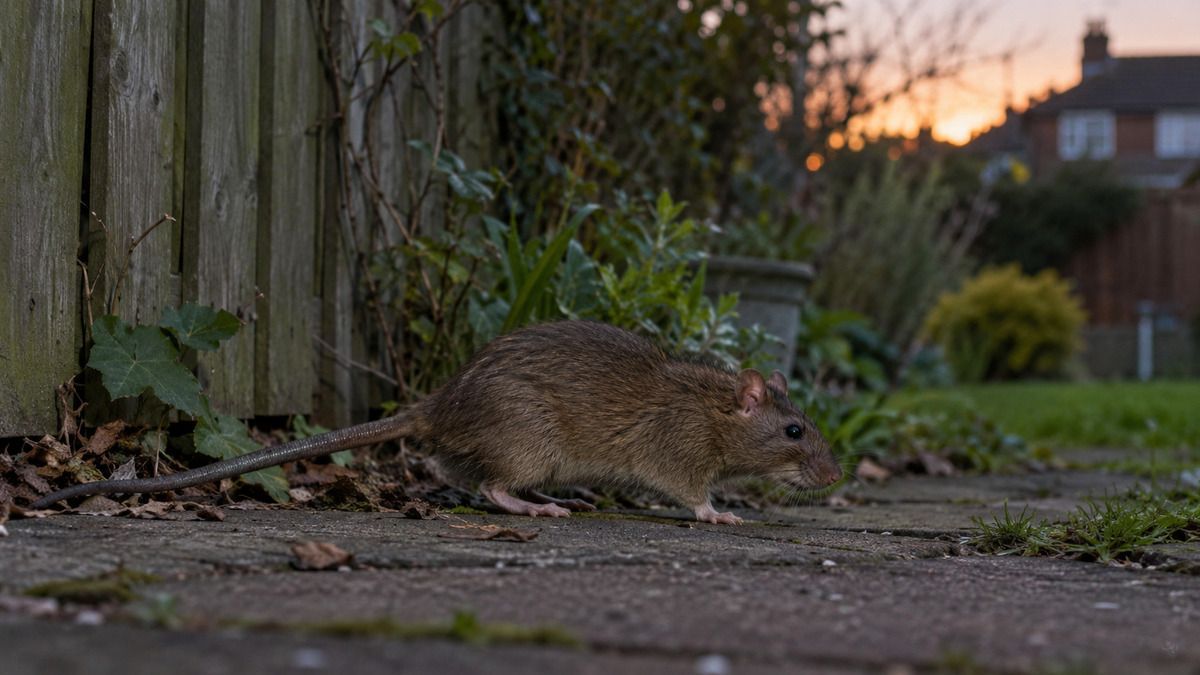
Rat burrows are holes about five to eight centimetres across in banks, under sheds, beside decking and next to compost bins, with the earth at the entrance worn smooth. A run of flattened grass between the burrow and a food source such as a bird feeder is often visible. Our page on rats in the garden and shed describes the typical set-up.
Look at the drains too. A rat often arrives through a broken pipe, so a lifted or missing cover on a drain inspection chamber or a rodding eye is worth noting. Gnawed packets in the garage, droppings in the shed and a greasy mark on the step by the back door all suggest the rats are moving between the garden and the house.
Rats, mice or squirrels: telling them apart
Put the signs together. Small pointed droppings in large numbers, fine nibbling and night noises in the kitchen mean mice. Large blunt droppings in small groups, coarse gnawing, burrows outside and night noises under the floor or in the walls mean rats. Daytime thumping in the loft, round pale droppings and chewed insulation or cables near the eaves mean grey squirrels.
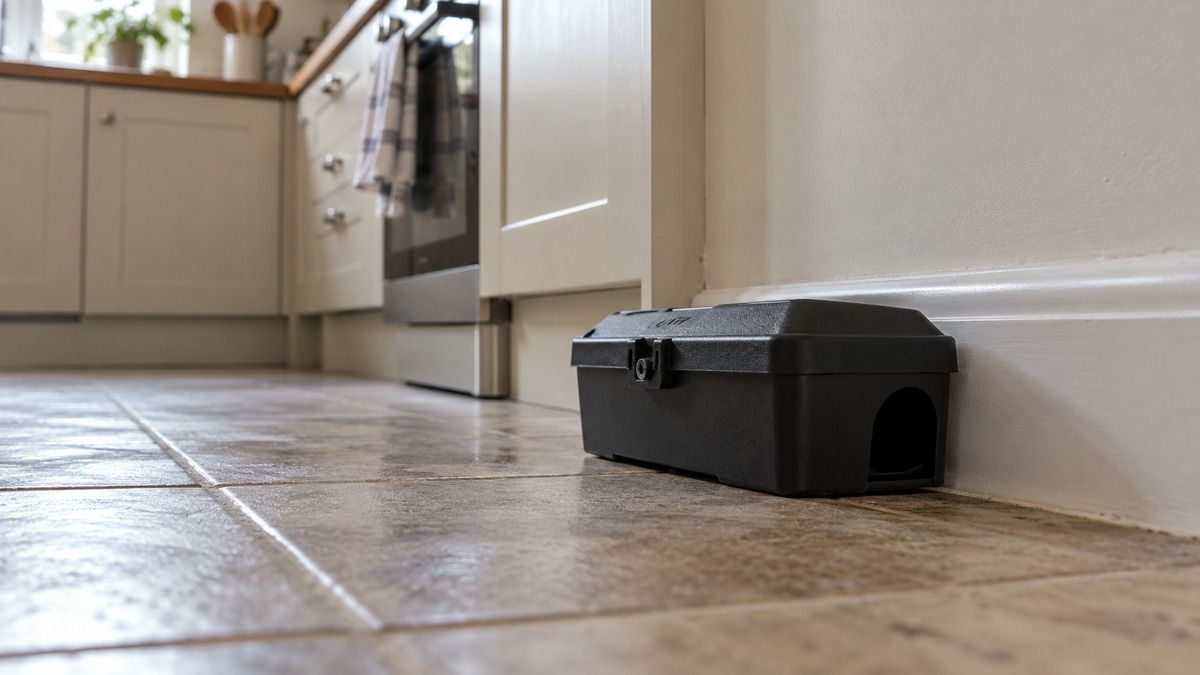
The distinction matters because the treatments differ. Mice are curious and respond quickly to stations and traps. Rats are wary and take days. Squirrels are trapped in the loft rather than baited, and a grey squirrel that has been trapped cannot legally be released, so noises in the loft get a different plan from droppings in the kitchen.
What to do when you find the signs
Do not clean up yet. The droppings, the smears and the gnawed packet tell the technician what species you have, how many there are, where they run and where they get in. Clearing the evidence before the first visit makes all of that harder. Fill in the form with what you have found, where it was and when the noises started, along with your postcode. We reply by email with one fixed price for a rat treatment or a mouse treatment, with the follow-up visits included. The work is carried out by one national company that is a BPCA member and CPD registered, certified to ISO 9001 and by the British Safety Council, SafeContractor approved and licensed to carry waste in England and Wales, so carcasses and used bait leave your home legally. If you book another firm instead, it is worth asking whether it is a BPCA member.
In the meantime, put food in sealed containers, keep pets away from the areas where you found droppings, wear gloves if you have to touch anything, and note any noises with the time of night you heard them. Do not block holes before the treatment starts, because a rodent sealed inside the building will gnaw a new way out.
Acting early is simply cheaper. A mouse pair found in the first week is a short treatment. The same pair left until spring is a colony that has fouled the insulation and chewed the cable to the shower pump. Rodents do not go away because they are ignored, so the first droppings are the best moment to deal with them.
Questions people ask
How can I tell if the droppings are fresh?
Fresh droppings are dark, soft and have a slight shine, and they smear if pressed with a gloved finger. After a few days they dry, go dull and grey and crumble. A mix of both along the same run means the animals are still using it.
I heard noises in the loft during the day. Is that rats?
Probably not. Rats and mice are mostly active at night, so scratching and thumping between early morning and late afternoon usually means grey squirrels. Tell us when you hear it and what it sounds like, and describe any droppings you find on the insulation.
Should I clean up the droppings before the technician comes?
No. Leave them where they are and note where each group is. Their size, number and position show the technician what species is present and which routes it uses. Keep pets and children away from the area, and clean it once the technician has seen it and advised on sanitising.
Can I have rats without ever seeing one?
Yes, and most people do. Rats are shy and nocturnal, so droppings, smears, gnawing and noises after dark are usually all you find. A rat seen in daylight tends to mean a larger population rather than a braver one.
Describe the signs and get a price
Describe what you have seen and heard in the form, with your postcode and when it began, and we reply with a fixed price and the earliest visit we can offer.
- Fixed price by email
- Follow-up visits included
- A BPCA member contractor
- Next day where possible

Get a fixed price for the treatment
Tell us what you have seen and heard, where, and when it started, and we reply by email with a fixed price for the whole treatment.
Sent.
Prefer to write? Email hello@rodent-control.uk with your postcode, your phone number and what you have found.